Front and Center Newsletter – Vol. 3, No. 8, August 2025
Meet the Marine. Be Inspired.
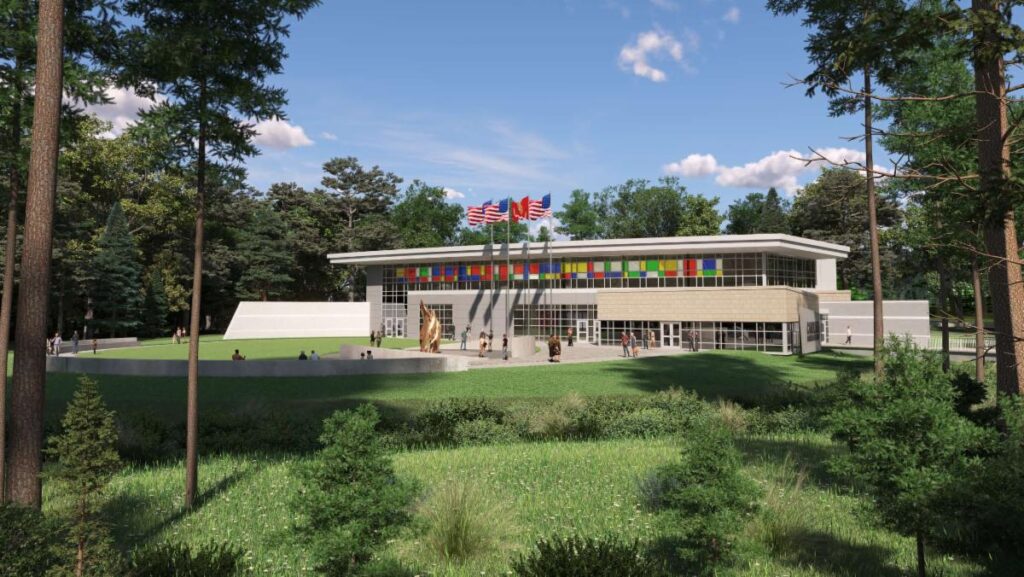
Opening Spring of 2026
Mission
Honor, preserve, and teach the legacy of Carolina Marines and Sailors.
Showcase the Marine example to inspire future generations.
Message from the President and CE0
Fellow Patriots,
Each passing month brings us closer to the day we open the doors of Carolina Museum of the Marine—and I’m proud to report that the momentum is real.
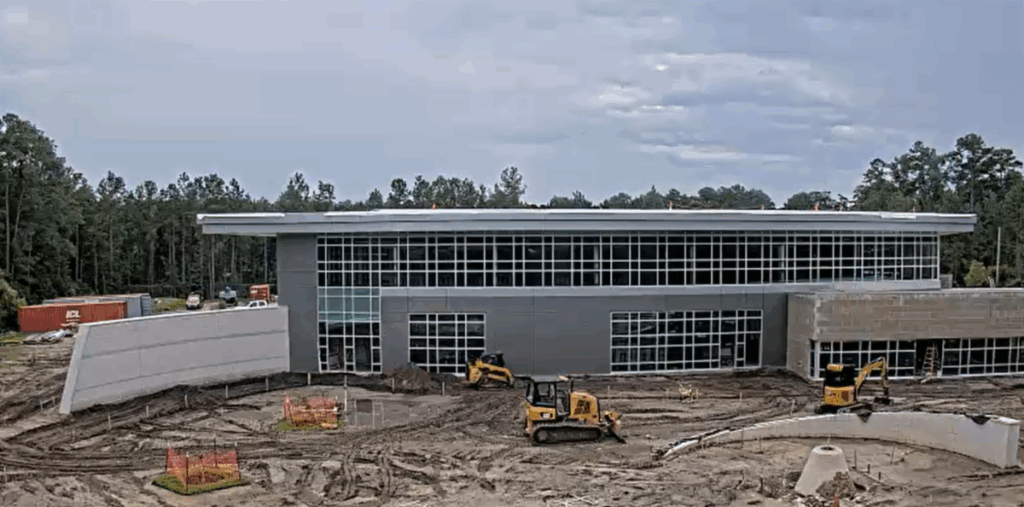
In July, we were honored to host the 20th Sergeant Major of the Marine Corps, SgtMaj Carlos A. Ruiz, for a private tour of our museum under construction. His visit is more than symbolic—it reflects growing national recognition of the mission we’re building here in the Carolinas.
We were also delighted to welcome long-time supporters from Stevenson-Hendrick Toyota, including general manager George Popajohn and social media representative Martin Urquizo Contreras. Like so many of you, they’ve stood by us through the years—and they left the tour energized by how far we’ve come.
Our team continues to push forward on every front: from exhibit fabrication and construction progress to the launch of our new flagship video and direct mail outreach to veterans across the state. Interest in the Plank Owner Membership Campaign remains strong, and I’m pleased to share that it will remain open until our Opening Day. There’s still time to be part of this founding legacy.
Thank you for walking with us on this journey. Your faith in our mission fuels every step forward. Semper Fidelis!
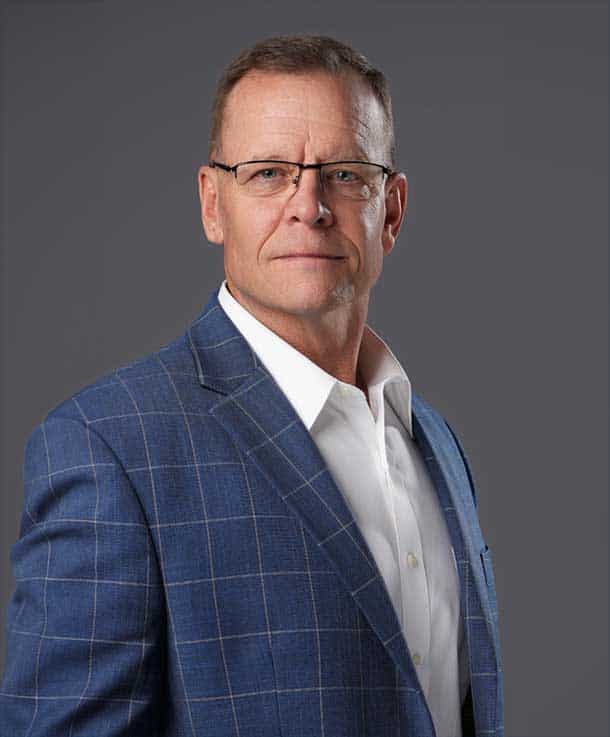
Warm regards,
Joe Schrader
Major General, USMC (Ret)
President and CEO
Join our CEO, Major General Joe Shrader, USMC (Ret)
as he takes us through the museum’s construction in progress.
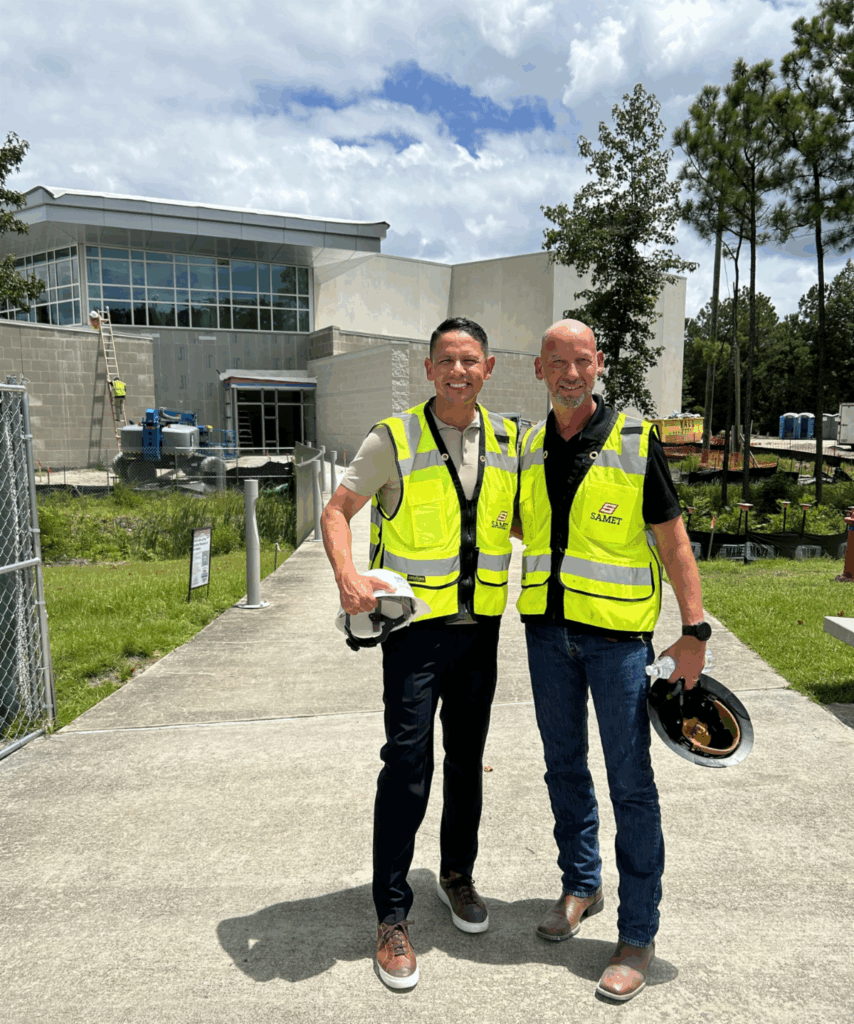
Sergeant Major of the Marine Corps Carlos A. Ruiz Visits Carolina Musuem of the Marine
Pictured from left to right, SgtMaj Carlos A. Ruiz and Museum VP of Ops SgtMaj Steve Lunsford, USMC (Ret)
Can We Trust our Senses?
Jim Danielson, PhD
Marine Veteran
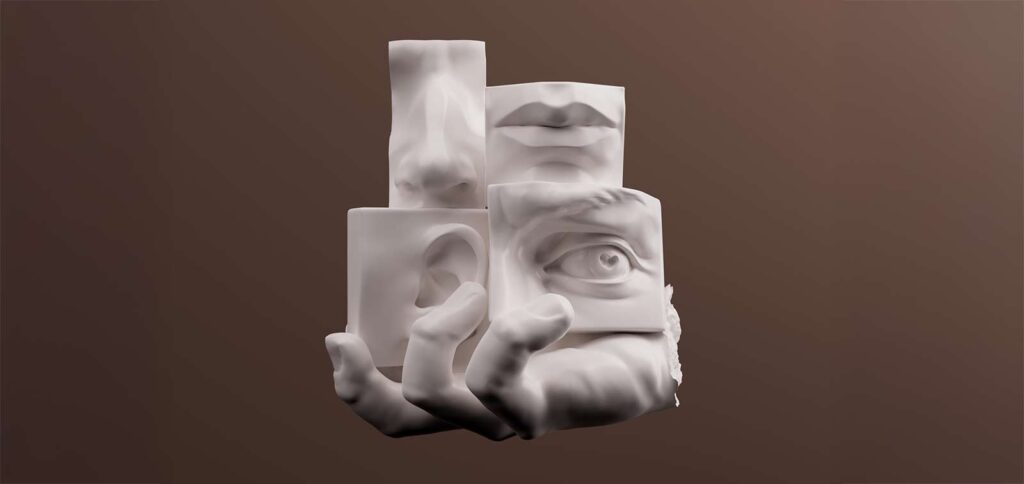
Image: V Panteon Stock photo ID:1844676677
In the 17th century, Rene Descartes (d. 1650 A.D.) published several works of philosophy that had a substantial effect on how people in Europe thought about our world, and importantly, about our capacity to understand it. Since the great thinkers of ancient Athens, people sought to understand our world from the belief that everything, living and non-living, is comprised of form and matter. In non-living things, the analysis is quite direct: inspecting what a thing is made of gives you the matter of its being, and the shape tells you what it does. Taken together, the form and matter of something tells you what it is. In living things, understanding them is more complicated, and interesting. The “form” of a living thing is its nature which is shared in common by individual members of each species. Thus, for example, there is a horse nature, a dog nature, a human nature, and each member of a species expresses the nature of its species. This process of expressing a living thing’s nature begins at conception when the internal power of a thing’s nature shapes the body through gestation into a form that expresses the animal’s nature. Aristotle (d. 322 B.C.) gives a fascinating account of how the human soul in gestation produces a body that is the perfect instrument for expressing intellect. Descartes argued that the form/matter distinction does not tell us about things with any kind of certainty because our senses can deceive us.

Greg Brown. Stock photo ID:878626144
Descartes also contended that appeal to final ends in things tells us nothing useful about them. This is a crucial element in the turn from pre-modern to modern thought. The issue here had to do with a general frustration over the fact that the study of being as an exercise in philosophy had not yielded the kind of certainty in our knowledge of things that many people wanted. Final ends, importantly explained for us in the writings of Aristotle, tell us what is thing is for. The final end of a thing is what it exists to do. Something or someone is a composite of form and matter, but the coming together of form and matter is done for a purpose, and understanding the purpose, for each kind of thing, gives us a complete understanding of what it is and its place in the order of nature. Final ends, however, suggest a giver of ends, that is, a creator who made everything, including us, with a purpose in mind. The idea that Descartes and others in his time were developing is that they might gain the kind of certainty of knowledge they desired of things if they examined things only from a materialist perspective.
Descartes proposed a method for studying the world and the things in it by starting from doubt. I will doubt everything, Descartes declared, that I cannot explain “clearly and distinctly.” So, Descartes begins considering things from the starting place of doubt, looking for what cannot be doubted, by observing that he knows he exists, as a thinking thing, because he is thinking. (This is the famous cogito ergo sum, I think, therefore I am. But Descartes was scooped more than a millennium earlier by St. Augustine who wrote that when he has doubts about God, he knows for certain that he himself exists because he is doubting. It may not be a co-incidence that Descartes had studied the writings of Augustine.) There is an important theme here that may not be obvious at first observation, and that is the search for a method of studying the world around us that uses the data of sense perception but does not rely on them. The senses can mislead us. St. Augustine understood this, too, and responded by observing that sense perceptions do not come to us already interpreted. We must take judgements of the mind about our sense perceptions and in this way work out the various ways that perceptions, at first, can be confusing. So then, can we trust our senses, or must we “trust the science”?
READ MORE
Returning Good Citizens
Answering the Call—Again and Again
Marines and Sailors do not serve alone. In every clime and place, Navy corpsmen have stood shoulder to shoulder with their Marine brothers and sisters—risking everything to preserve life in the midst of battle. This month, we honor Hospital Corpsman Luis Fonseca Jr., whose extraordinary valor and enduring commitment reflect the quiet courage of those who serve in the shadows, yet shape the very soul of the Marine Corps.
Forged in Carolina, Proven in Combat: The Story of HM1 Luis Fonseca Jr., USN
“Doc Speedy”
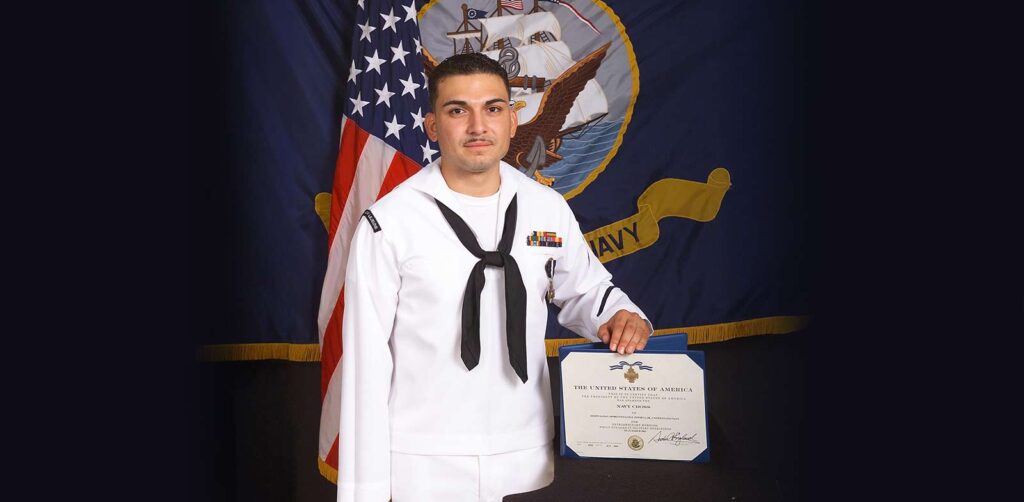
When HM1 (FMF) Luis Fonseca Jr. arrived in North Carolina for field medical training, he was a young Navy corpsman with a deep sense of purpose but no idea how quickly his courage would be tested. At Camp Lejeune and the Field Medical Training Battalion, he was trained not only in trauma care and field medicine—but in what it means to serve side by side with Marines, to earn their trust, and to be ready when it matters most.
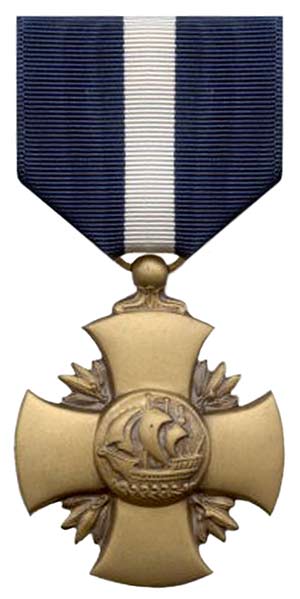
Just two years later, during the 2003 invasion of Iraq, Fonseca would become the youngest living recipient of the Navy Cross for heroism. Amidst heavy fire near Nasiriyah, Iraq, he raced through open terrain to rescue five wounded Marines from a disabled amphibious assault vehicle. With calm resolve, he stabilized and evacuated them—even as rocket-propelled grenades and small arms fire rained down. He was 20 years old.
Fonseca’s bravery reflects the very essence of what the Carolina Museum of the Marine exists to honor: the extraordinary bond between Marines and Navy corpsmen, and the character forged through service in the Carolinas. “Everything I needed to know to save lives, I learned at Camp Lejeune,” Fonseca has said in interviews. “They taught me to run toward danger, not away from it.”
Today, Fonseca continues to serve, mentor, and speak on the values of courage, loyalty, and sacrifice. His legacy—like so many shaped at Camp Lejeune, Cherry Point, and New River—reminds us that leadership is not a matter of rank, but of readiness to serve others at great personal cost.
As we prepare to open Carolina Museum of the Marine, we carry stories like HM1 Fonseca’s with us—living proof that our region has shaped not only warriors, but heroes. Marines and Sailors whose service helped define the legacy our Museum is built to honor.
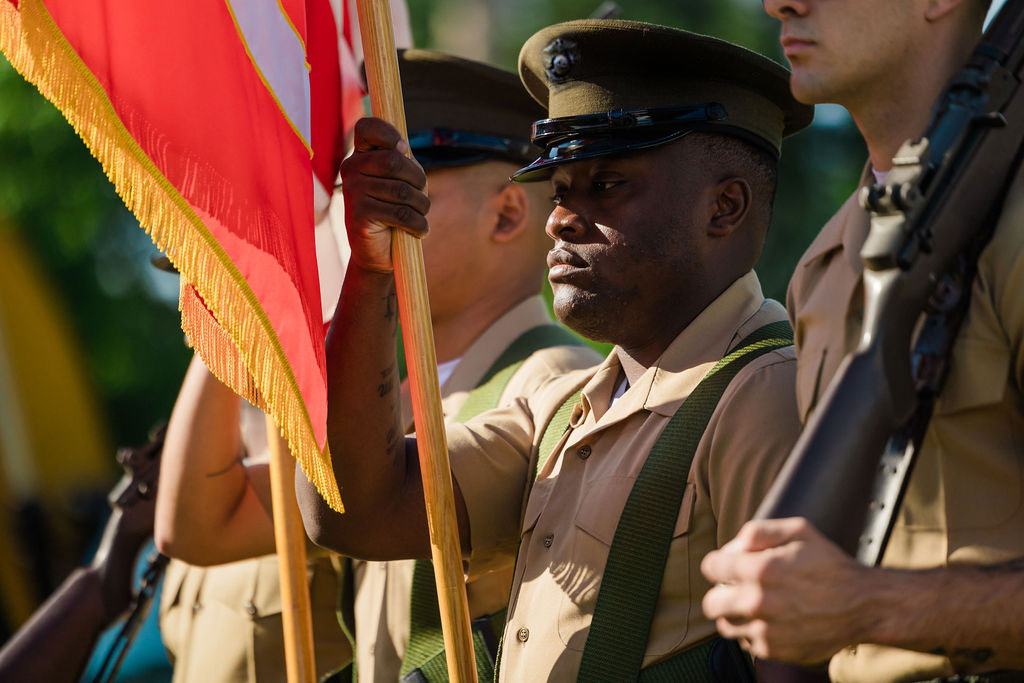
Plank Owner Campaign Extended!
Become a Founding Plank Owner Member of the Carolina Museum of the Marine and be among the first to stand with those who’ve served. Enjoy exclusive recognition, special benefits, and lasting impact—honoring our Carolina Marines and Sailors and inspiring generations to come.
Golf!!!
26 September 2025
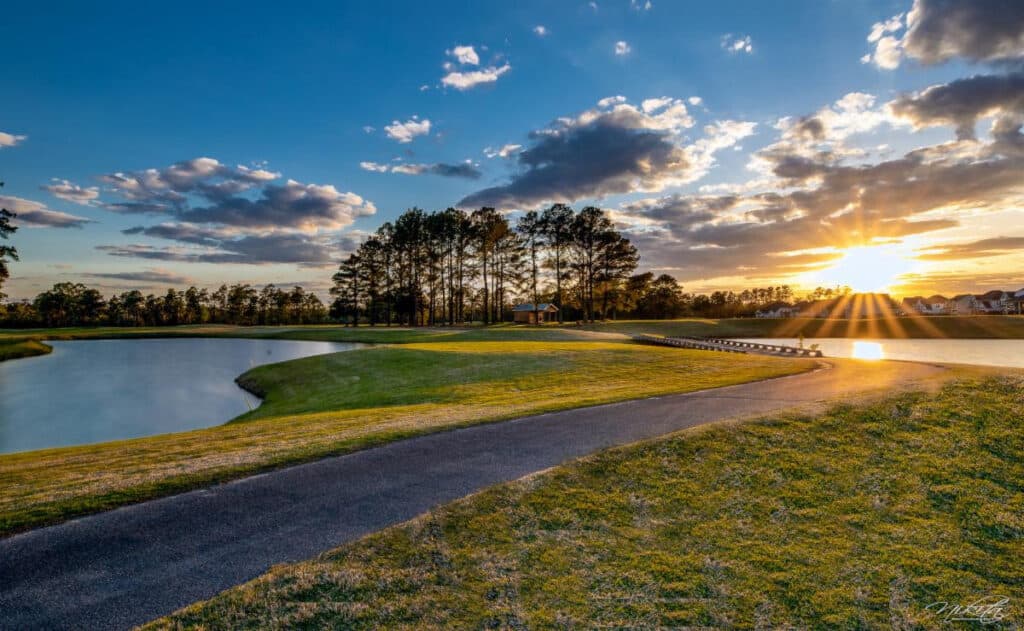
Join Us on the Course!
Bear Trail Golf Club
Tee up for tradition, fun, and a great mission at the
15th Annual Al Gray, Marine Golf Classic!
VISIT OUR ONLINE GIFT SHOP!

https://www.istockphoto.com/portfolio/SARINYAPINNGAM?mediatype=photography
Shown: Amphibious Golf Attire at 13th Annual Golf Classic 2023
Please join us in supporting the mission of
Carolina Museum of the Marine.
When you give to our annual campaign, you help to ensure that operations continue during construction and when the doors open!
Stand with us
as we stand up the Museum!
Copyright,August 2025. Carolina Museum of the Marine
2025-2026 Board of Directors
Executive Committee
LtGen Mark Faulkner, USMC (Ret) – Chair
Col Bob Love, USMC (Ret) – Vice Chair
CAPT Pat Alford, USN (Ret) – Treasurer
Mr. Mark Cramer, JD – Secretary
In Memoriam: General Al Gray, USMC (Ret)
MajGen Jim Kessler, USMC (Ret)
Col Grant Sparks, USMC (Ret)
MajGen Joe Shrader, USMC (Ret), President and CEO, Ex Officio Board Member
Members
Col Joe Atkins, USAF (Ret)
Mr. Mike Bogdahn, US Marine Corps Veteran
Mr. Keith Byrd, US Marine Corps Veteran
MGySgt Osceola “Oats” Elliss, USMC (Ret)
Mr. Frank Guidara, US Army Veteran
Col Bruce Gombar, USMC (Ret)
LtCol Lynn “Kim” Kimball, USMC (Ret)
CWO4 Richard McIntosh, USMC (Ret)
LtGen Gary S. McKissock, USMC (Ret)
Ms. Sandra Perez
The Honorable Robert Sander, Former General Counsel of the Navy
Mr. Billy Sewell
Col John B. Sollis, USMC (Ret)
Staff
MajGen Joe Shrader, USMC (Ret), President and Chief Executive Officer
Ashley Danielson, VP of Development
SgtMaj Steven Lunsford, USMC (Ret), VP of Operations
CWO3 Charles McCawley, Finance and HR Manager
CWO5 Lisa Potts, USMC (Ret). Curator
Andrea Oaxaca, Associate Curator
Sarah Williams, Docent and Volunteer Manager