Front and Center Newsletter – Vol. 3, No. 02, February 2026

Meet the Marine. Be Inspired.
Opening to the public
June 8, 2026
Lejeune Memorial Gardens, Jacksonville, NC

Mission
Honor, preserve, and teach the legacy of Carolina Marines and Sailors.
Showcase the Marine example to inspire future generations.
Message from the President and CEO
Fellow Patriots,
As we move into the final stretch before opening, I’m struck by how clearly the stories we share — and the ideas we explore — reflect the purpose of this Museum. In this month’s newsletter, Dr. Jim Danielson’s essay on critical thinking reminds us that freedom is not accidental; it depends on informed citizens who know how to study, analyze, and engage with one another thoughtfully. Paired with our feature honoring Col John Kopka, USMC (Ret), we see those principles lived out — not only in uniform, but in decades of community leadership, mentorship, and quiet commitment after coming home. Together, these pieces speak to what the Carolina Museum of the Marine exists to do: connect service to citizenship, and history to the responsibilities of the present.
With that mission in mind, I’m pleased to share an important milestone: the Carolina Museum of the Marine will open to the public on June 8, 2026.
This date represents years of effort by an extraordinary group of supporters, volunteers, staff, and partners who believed in this vision long before the building took shape. As we prepare for opening day, our focus remains on getting it right — ensuring that the stories of Carolina Marines are told with accuracy, dignity, and inspiration, and that every visitor leaves with a deeper understanding of service and leadership.
I’d also like to note two important updates as we look ahead. The Plank Owner Campaign will conclude on April 30, 2026, marking the close of a truly foundational chapter in the Museum’s history. Our Plank Owners have carried this project forward from concept to reality, and their legacy will be felt for generations. In addition, I’m delighted to welcome Melody Tidwell, who has joined our team as Admissions and Retail Manager. Melody brings strong operational experience and a deep commitment to service, and she will play an important role as we prepare to welcome our first visitors. Additional staff positions will be posted on our website as they become available in the months ahead.
Thank you for walking this journey with us. Every step brings us closer to opening our doors — and to honoring the Marines, Sailors, families, and communities whose stories deserve to be told.
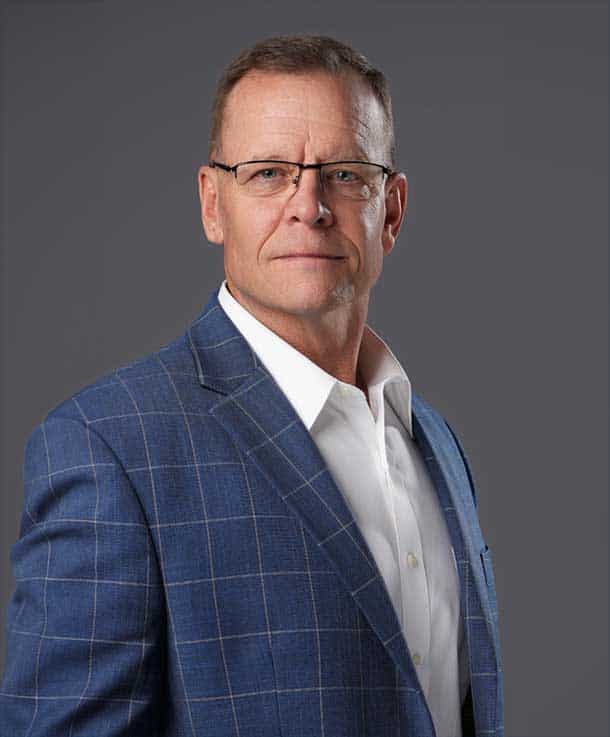
Semper Fidelis,
Joe Schrader
Major General, USMC (Ret)
President and CEO
Critical Thinking and Human Freedom
Jim Danielson, PhD
Marine Veteran
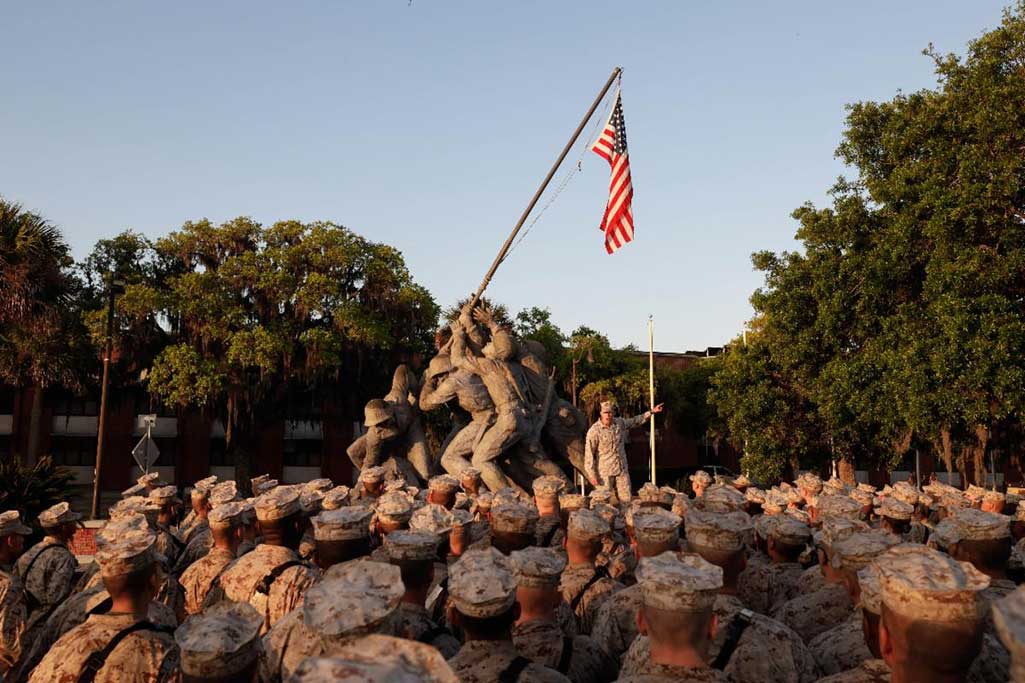
Government of the United States. Public domain, via Wikimedia Commons
Last month, we discussed the importance of being able to think critically. This was a skill that in the past was more clearly central in the educations of young people and certainly of those Americans who were able to attend college. Interestingly, when public officials discussed the importance of education to a free and self-governing people, their statements were noticeably more detailed than we usually find today. For example, in last month’s “Front and Center” we observed a statement of Thomas Jefferson to a friend that “[i]f a nation expects to be ignorant & free, in a state of civilization, it expects what never was & never will be. The functionaries of every government have propensities to command at will the liberty & property of their constituents. There is no safe deposit for these but with the people themselves; nor can they be safe with them without information. Where the press is free and every man able to read, all is safe.” At about the time of Jefferson’s writing, we find James Madison, our fourth president, saying: “A popular Government, without popular information, or the means of acquiring it, is but a Prologue to a Farce or a Tragedy.” For both men, it is vital to a free society that people have access to accurate information, and that they know how to think about it, or, we may say, how to analyze it. When people today discuss the need for teaching how to think critically, the general tone may be different, but they are at once identifying a critical need, and conceding that at the present moment, we aren’t doing a very good job of it. Again, last month we quoted General Gray as describing critical thinking by saying that it begins with “study and analysis,” that is, with information and careful thinking about it
It is not a risky thing to say that thinking is the activity that most fully expresses our humanity. One could reply that depending on one’s understanding of “humanity,” the most fully expressive human activity is to love, so perhaps we could find agreement with the observation that insofar as we are people cooperating with others in society, it is thinking that drives healthy and productive interaction. For this reason, it is important that we learn to do it well. When talking with people about this issue, one occasionally hears the assertion that everyone thinks, and does so all the time. This is true, of course, but beside the point. An arguably effective reply to this is to observe that just as everyone can think, everyone can sing, but most of us don’t do it very well. Of course, the skill of careful, critical thinking is learned in doing it, that is, in practice. It is a skill however that best thrives in a culture in which people are expected to think and to speak competently. Like any skill we can develop, some people will do it better than others, but everyone can learn to improve their thinking since this power of human nature defines the essence of being human.
Having quoted two of our presidents on the importance of information and of knowing what to do with it, we get a glimpse of this at work in early American society in the second inaugural address of Thomas Jefferson. Jefferson’s first inaugural address receives more attention than his second because it is better. In the first inaugural address, for example, Jefferson details the principles that will guide his presidency in a most eloquent way, including among the principles listed: “Equal and exact justice to all men, of whatever state or persuasion, religious or political:–peace, commerce, and honest friendship with all nations, entangling alliances with none:–the support of the state governments in all their rights, as the most competent administrations for our domestic concerns, and the surest bulwarks against anti-republican tendencies:–the preservation of the General government in its whole constitutional vigor, as the sheet anchor of our peace at home, and safety abroad:…” After laying out his guiding principles, Jefferson pledges himself to them saying: “These principles form the bright constellation, which has gone before us and guided our steps through an age of revolution and reformation. The wisdom of our sages, and blood of our heroes have been devoted to their attainment:–they should be the creed of our political faith; the text of civic instruction, the touchstone by which to try the services of those we trust; and should we wander from them in moments of error or of alarm, let us hasten to retrace our steps, and to regain the road which alone leads to peace, liberty and safety.” In the second inaugural address, Jefferson doesn’t rise to the rhetorical excellence of his first address, but he does say things about American society that merit attention.

It should be borne in mind that Jefferson’s first inaugural address was given before he had served a day in office as president, and the second address was given after he had served as president for four years. His first four years as president were significant including the purchase of the Louisiana Territory from France, that more than doubled the size of United States, and brought the criticism of Jefferson’s opponents in Congress for making the purchase without constitutional authority (which was true). This and other actions by President Jefferson have led many of his admirers to conclude that Jefferson before becoming president was a different public figure than the one who occupied the White House. For this reason, we may surmise that awareness of actions as president in his first term that were at odds with the governing philosophy he had long advocated account, at least in part, for the differences in content and tone between the two inaugural addresses.
In the second inaugural address, just before the paragraph that concerns us here, Jefferson discusses the difficulties he has had with a press that misrepresented the truth of his administration and the problems with which they were struggling, and in the end says that the press will face discipline for mendacity “in the Censorship of Public opinion.” Whatever one might think of this regarding the extent to which the complaints are true or mixed with practical frustration, Jefferson’s comments clearly indicate a concern for the quality of information given to the public about the operations of government at home and abroad. He then discusses his confidence in the future of the country because of the Americans who inhabit it.
Contemplating the union of sentiment now manifested so generally, as auguring harmony & happiness to our future course, I offer to our country sincere congratulations. With those too, not yet rallied to the same point, the disposition to do so is gaining strength. Facts are piercing through the vail drawn over them: & our doubting brethren will at length see that the mass of their fellow citizens, with whom they cannot yet resolve to act, as to principles & measures, think as they think, & desire what they desire. That our wish, as well as theirs, is, that the public efforts may be directed honestly to the public good: that peace be cultivated, civil & religious liberty unassailed, law & order preserved, equality of rights maintained, & the state of property, equal or unequal, which results to every man from his own industry, or that of his fathers. When satisfied of these views, it is not in human nature that they should not approve and support them. In the mean time, let us cherish them with patient affection: let us do them justice and more than justice in all competitions of interest; & we need not doubt that truth, reason, & their own interests will at length prevail, will gather them into the fold of their country, & and will compleat that entire union of opinion which gives to a nation the blessing of harmony & and the benefit of all it’s strength.
We’ve mentioned in the past the arresting opening line of an English novel titled The Go-Between, that reads: “The past is a foreign country, they do things differently there.” People in the past did things differently than most people today, and this includes writing. Their educations were different from ours, and this largely accounts for differences we can see between how they thought and how they wrote. In this paragraph, Jefferson congratulates his countrymen for a general union of sentiment. “Sentiment” in the 18th century had a different meaning that it has now. Adam Smith is famous in our time for a book titled An Inquiry into the Nature and Causes of the Wealth of Nations, published in 1776, but during his lifetime, Smith was known as the author of a book titled The Theory of Moral Sentiments. “Sentiment” was not so much a feeling as a way of seeing things. English-speaking moral philosophers in the 18th century saw sentiment as the foundation of morals and they saw sentiments as developed in each person through experience of interactions with other people. Thus, for example, people will determine that stealing from others is wrong because of how they react, both emotionally and intellectually, to having something stolen from them. I don’t like it, therefore I shouldn’t do it to other people. Jefferson is encouraged by the fact that although there are disputes among Americans concerning how to govern themselves and conduct commerce and relations with other countries, there is a general agreement among them about how to go about thinking things through and discussing them.
_Jefferson looks forward to a growing agreement concerning “principles & measures” in the expressed belief that when understood, we may say through study and analysis, “it is not in human nature that they should not approve & support them.” We find in Jefferson’s second inaugural address the observation that while Americans disagree about matters of public concern, they yet have a common sentiment or way of considering things and discussing them that over time will bear the fruit of consensus which is an important element in the self-government of a free people. In this we can see, or at least catch a glimpse, of the importance of critical thinking to human freedom.
Returning Good Citizens
Answering the Call – Again and Again
Beginning in January, our ‘Returning Good Citizens’ feature will spotlight additional generous supporters who have made naming gifts to the Museum. Each story reflects the values of service, leadership, and legacy that define Carolina Marines and Sailors. We are deeply grateful to every donor who has chosen to Carry the Legacy Forward
Coming Home: Ties That Bind
Honoring
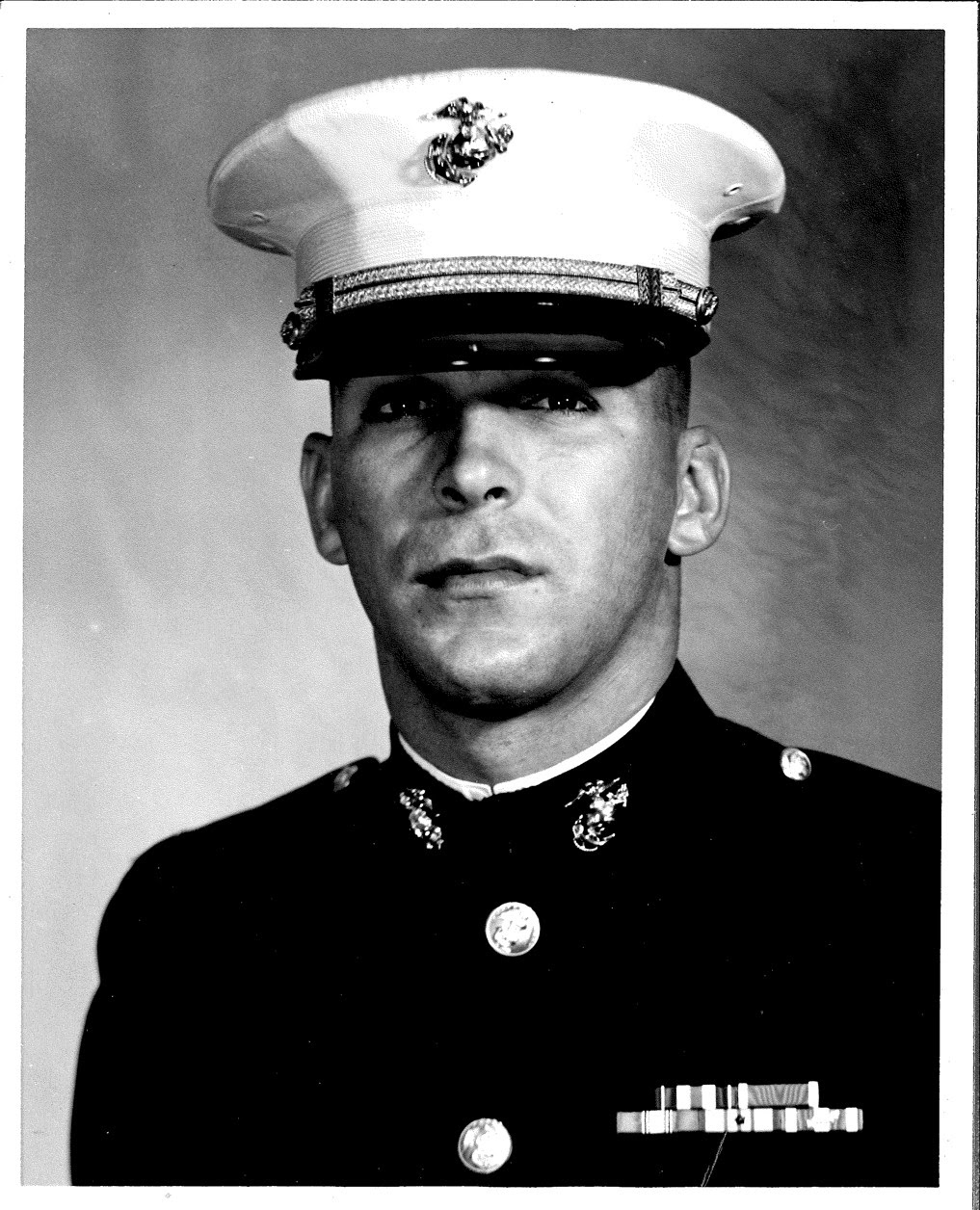
Colonel John Kopka, USMC (Ret)
They simply find new ways to live out the values they carried in uniform.
Col John Kopka is one of those Marines.
A decorated Vietnam War veteran, Col Kopka retired from the United States Marine Corps in 1994 after 30 years of distinguished service. His career included key leadership roles, culminating in his service as Chief of Staff at Camp Lejeune. Earlier, while serving with the 3d Marine Division in Vietnam in 1966, he was awarded the Silver Star for conspicuous gallantry and bravery—an enduring testament to his courage under fire and devotion to fellow Marines.
Yet for those who know him best, Col Kopka’s legacy is defined not only by his military record, but by how fully he embraced service after coming home.
For more than three decades, he has been a familiar and reassuring presence on the sidelines of Jacksonville High School football games—affectionately known as the “get back coach.” Through countless seasons, he has mentored young people with the same steady discipline, accountability, and respect that defined his Marine Corps career. In 2025, the naming of the Jacksonville High School press box in his honor recognized what the community had long known: his quiet commitment has shaped generations.
Col Kopka has also been a tireless civic leader, earning recognition through the United Way of Onslow County’s Golden Rule Award, the Fabric of Our Community Award, and the Heroes Spirit Award from the Jacksonville-Onslow Sports Hall of Fame. Across every role, he has been a bridge—connecting military and civilian communities, past and present, service and citizenship.
Behind the scenes, Col Kopka has likewise been a steadfast champion of the Carolina Museum of the Marine from its earliest days. He was a loyal supporter of museum founder SgtMaj Joe Houle, USMC (Ret) lending his time, credibility, and enthusiasm to countless fundraisers and community efforts on behalf of the Museum. Long before construction milestones and exhibit installations, he believed deeply in the mission—and stayed with it.
For the Museum team, Col Kopka has been more than an advocate. He has been a generous source of insight and institutional memory, a trusted voice of encouragement, and—when needed—a welcome source of humor that reminded us why the work matters. In meaningful ways both visible and unseen, he stayed the course with us all the way to the finish line.
It is fitting, then, that the Coming Home: Ties That Bind exhibit is sponsored by The James and Valerie Grabicki Family to honor Col Kopka and his wife, Pauline. This sponsorship by a sister and her family is a profound recognition that Col Kopka’s legacy lies in the people and community he has faithfully served.
In honoring Col John Kopka, we honor a Marine who came home and never stopped living the values of Honor, Courage, and Commitment.
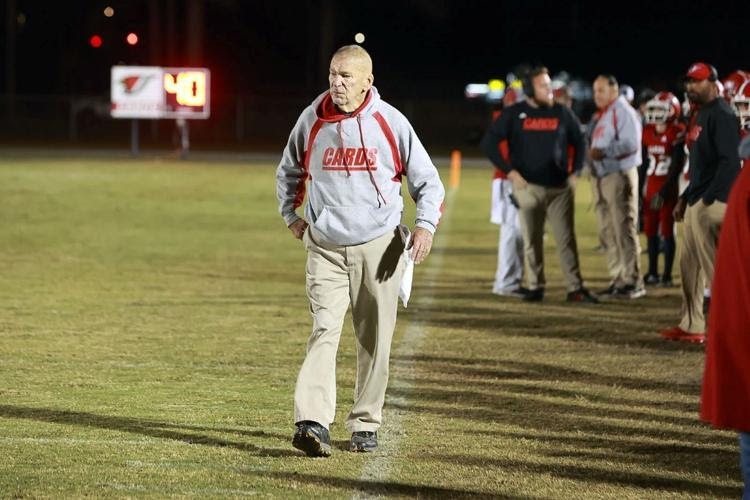
Contributed photo: Jacksonville Daily News. Raeford Brown
Plank Owner Registration
closes April 30, 2026
Become a Founding Plank Owner Member of the Carolina Museum of the Marine and be among the first to stand with those who’ve served. Enjoy exclusive recognition, special benefits, and lasting impact—honoring our Carolina Marines and Sailors and inspiring generations to come.
VISIT OUR ONLINE GIFT SHOP!

https://www.istockphoto.com/portfolio/SARINYAPINNGAM?mediatype=photography
Please join us in supporting the mission of
Carolina Museum of the Marine.
When you give to our annual campaign, you help to ensure that operations continue during construction and when the doors open!
Stand with us
as we stand up the Museum!
Copyright, February 2026. Carolina Museum of the Marine
2025-2026 Board of Directors
Executive Committee
LtGen Mark Faulkner, USMC (Ret) – Chair
Col Bob Love, USMC (Ret) – Vice Chair
CAPT Pat Alford, USN (Ret) – Treasurer
Mr. Mark Cramer, JD – Secretary
In Memoriam: General Al Gray, USMC (Ret)
MajGen Jim Kessler, USMC (Ret)
Col Grant Sparks, USMC (Ret)
MajGen Joe Shrader, USMC (Ret), President and CEO, Ex Officio Board Member
Members
Col Joe Atkins, USAF (Ret)
Mr. Mike Bogdahn, US Marine Corps Veteran
Mr. Keith Byrd, US Marine Corps Veteran
MGySgt Osceola “Oats” Elliss, USMC (Ret)
Col Bruce Gombar, USMC (Ret)
LtGen Robert “Fuzzy” Hedelund, USMC (Ret)
LtCol Lynn “Kim” Kimball, USMC (Ret)
CWO4 Richard McIntosh, USMC (Ret)
LtGen Gary S. McKissock, USMC (Ret)
Ms. Sandra Perez
The Honorable Robert Sander, Former General Counsel of the Navy
Mr. Billy Sewell
Col John B. Sollis, USMC (Ret)
Staff
MajGen Joe Shrader, USMC (Ret), President and Chief Executive Officer
Ashley Danielson, VP of Development
SgtMaj Steven Lunsford, USMC (Ret), VP of Operations
CWO5 Lisa Potts, USMC (Ret). Curator
CWO3 Charles McCawley, Finance and HR Manager
Sarah Williams, Docent and Volunteer Manager
Alexandra Price, Curatorial Assistant