
Front and Center Newsletter – Vol. 5, No. 11, November 2026

Meet the Marine. Be Inspired.
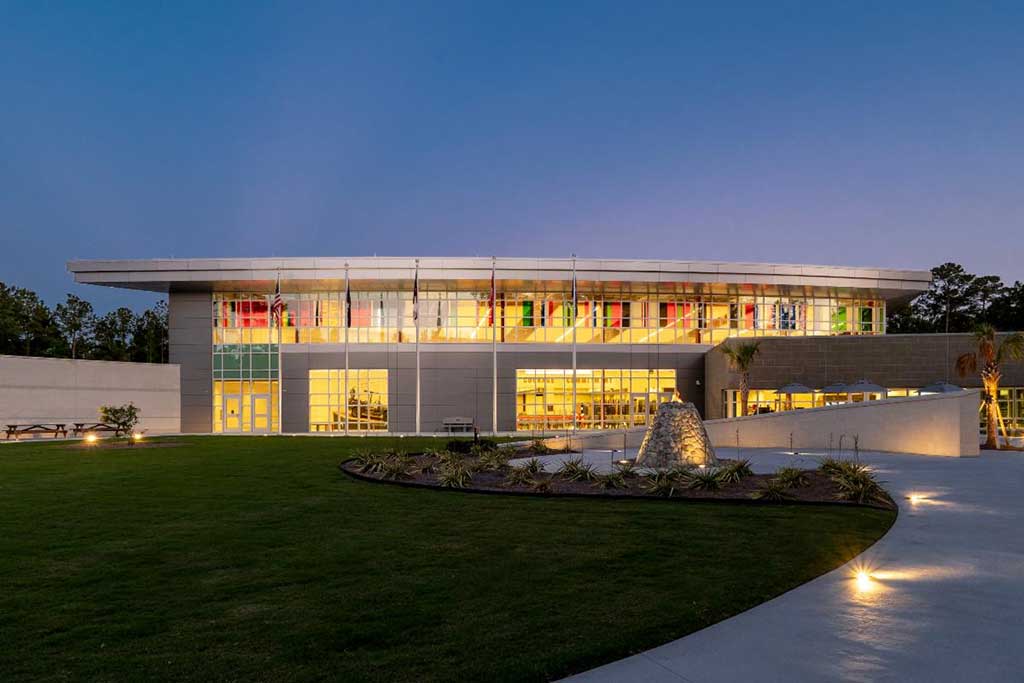
Mission
Honor, preserve, and teach the legacy of Carolina Marines and Sailors.
Showcase the Marine example to inspire future generations.
Dear Friends of the Museum,
It is a privilege to join Carolina Museum of the Marine and become part of its mission to honor, preserve, and teach the legacy of Carolina Marines and Sailors. In these first weeks, I have been struck by both the extraordinary museum you have built and the people whose dedication made it possible.
The skill and care of our general contractor, architects, exhibit designers, and project manager are evident throughout the Museum. Equally impressive is the work of our small, hardworking staff—and the years of commitment from volunteers, donors, board members, public officials, and so many others who helped bring this vision to life. To everyone who has played a part, thank you. I am proud to join you in carrying this mission forward.
In the coming months, we will welcome Boots, Paws, and Hooves on the Ground: U.S. Marines and their Animals, a temporary traveling exhibition on loan from the Marine Corps Heritage Foundation, featuring images from the collection of the National Museum of the Marine Corps. The exhibition explores the history of animals serving alongside U.S. Marines, offering another way to discover the Marine story, and will be here through March 31, 2027. We are grateful to the Marine Corps Heritage Foundation and the National Museum of the Marine Corps for making it possible to share these stories with our visitors.
I look forward to meeting more of you, hearing your stories, and welcoming you to the Museum. Your continued involvement will help us build on this remarkable beginning and inspire generations to come.
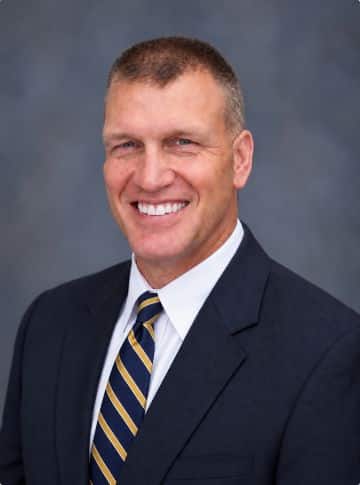
Semper Fidelis,
Kipp Wahlgren
Colonel, USMC (Retired)
President and CEO
A Proud Tradition. A Community Celebration.
Celebrate the Marine Corps’ 251st Birthday
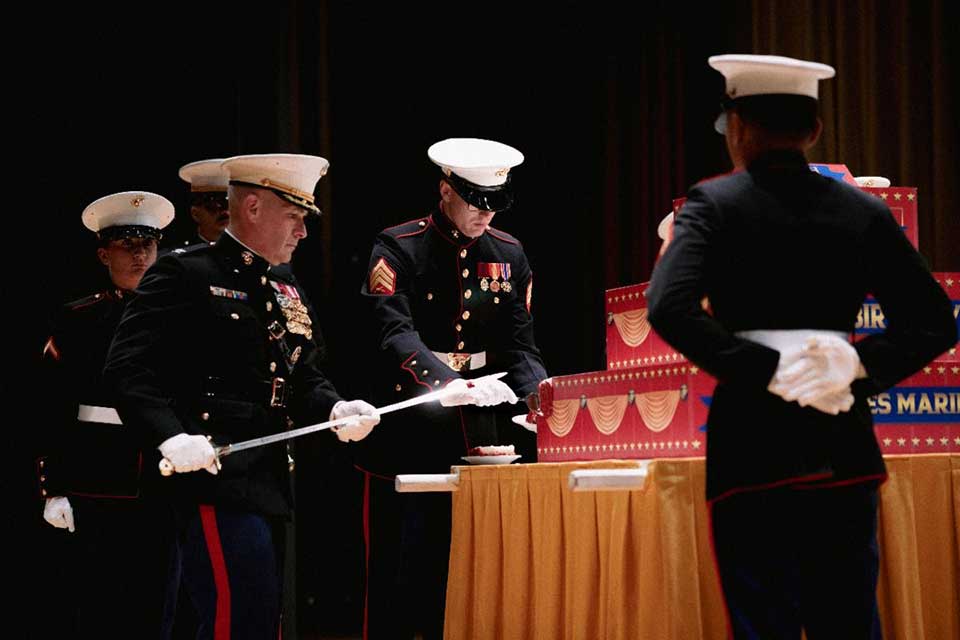
November 10, 2026 | 10:00 a.m.
Carolina Museum of the Marine
Some traditions are too meaningful to keep to ourselves.
Our Board of Directors warmly invites you to join us in celebrating the Marine Corps’ birthday; a gathering honoring generations of service and expressing our gratitude to the community that supports our mission.
Marines, families, neighbors, and friends are all welcome.
The Fabric of American Myth
Jim Danielson, PhD
Marine Veteran · Retired Professor of Ethics
“The United States Marine Corps, with its fiercely proud tradition of excellence in combat, its hallowed rituals, and its unbending code of honor, is part of the fabric of American myth.” These words, by military affairs journalist Thomas E. Ricks, are most interesting, we might say, because of the reference to “the fabric of American myth.” In this usage, “myth” is not intended to mean “fable,” but rather it refers to an understanding of our history, shared by Americans, that serves as identifiable reasons for being proud to be American. In November, we celebrate the founding of the Marine Corps, now in its 251st year of service to the United States, and while the fabric of American myth embraces the Marine Corps, it is larger than the Marine Corps. Importantly, not only is it larger than the Marine Corps, the fabric of American myth has within it threads that do not rest comfortably together, and yet are equally American. This reality creates tensions in the interpretation of American history and in the meaning and purpose of the United States in the world, that at times cause disagreements among Americans that generate unnecessarily sharp conflicts.
For example, a particularly American contribution to political thought and practice is federalism. Federalism is understood as a fabric of governing order that decentralizes authority, holding it as close to home as is workable. Thus the farther from the individual a level of government is, the federal government, for example, the more general are its duties. The principle of federalism is explicit in our first constitution, the Articles of Confederation and Perpetual Union, in which Article II reads as follows: “Each state retains its sovereignty, freedom, and independence, and every power, jurisdiction, and right, which is not by this Confederation expressly delegated to the United States, in Congress assembled.” Here we see the American principle of federalism in its most mature expression, creating a federation of sovereign states rather than a nation, one and indivisible. This fact is made plain in Article III: “The said States hereby severally enter into a firm league of friendship with each other, for their common defense, the security of their liberties, and their mutual and general welfare, binding themselves to assist each other, against all force offered to, or attacks made upon them, or any of them, on account of religion, sovereignty, trade, or any other pretense whatever.” A league of friendship is an agreement among people who regard one another as friends for purposes of mutual benefit. This is a very American way of self-government.
However, we find in the fabric of American myth another way of doing things which has the form and function of a unitary national state of the sort that developed in Europe in the 17th and 18th centuries. The development of this form of government grew over time in the United States in the early 19th century, but rose to prominence as a consequence of the war of 1861-1865, commonly called the Civil War.[i] In the theory of American federalism, sovereignty, or the authority to govern, is held by the people of each state
acting as political societies through their state legislatures. In the theory of the unitary national state, sovereignty is held by one central authority, in one place, governing over the entire country. One might think that these two views of governing order are incompatible, but they are both part of American history; they are both part of the fabric of American myth. Moreover, seemingly incompatible ideas like this appear frequently in American history and in American thought, and for some people, actually many people, incompatible ideas like the one just discussed here raise important questions about what it means to be an American. This discussion about being American is the sort of conversation that should be “front and center” in American life, and this conversation can be very enriching to American society when we discuss, when we disagree, and do so collegially as countrymen.
Some people believe that it is too much to think that we can have widespread collegial discussion of important questions in American life, and the evidence is usually that we don’t seem to have it now. Yet, we might reply saying that if conversation among people that is disciplined and that embraces disagreement is good for American society, then it is good to seek to achieve it. Happily for us, in this effort, we have important lessons to be learned from the United States Marine Corps, a society of Americans that is older than the Union itself.
One ability that is important to develop is self-reflection. People are better equipped to engage in meaningful conversation the better they understand themselves. This is captured in the first principle of Marine Corps leadership, which we have occasion to discuss fairly often: “Know yourself, and seek self-improvement.” We can approach this principle by observing that we each have a mind and a will that is free in the sense that it is under each person’s control.[ii] However, each of us at birth is a bundle of unrealized potentials regarding the various powers of human nature, and these need to be developed. Critical to this development is the ability to examine ourselves honestly with the purpose of seeking to develop, or actualize, the potentials we have. This is the basic structure of self-improvement. The difficulty some people encounter is the part about examining oneself honestly. St. Paul writes in his letter to the Christians at Rome that we should not think of ourselves more highly than we ought to do, but the advice is clearly given as a guide to self-reflection.[iii] Importantly, the passage just identified includes the observation that some people will engage in self-reflection more skillfully and thus more effectively than others. We may be equal one with another in possession of the rights to life, liberty, and justly acquired property, but in many ways, the ability to examine oneself, for example, we are not equal.

However, this is yet another important reason for engaging in conversations with others about questions of importance to us both as human beings and as Americans. People will say occasionally that an important ambition of life is to leave their homes better places than they found them. Albert Jay Nock wrote in the 1930s that if we wish to improve our society, we must seek self-improvement. The Marine Corps understands this, and has left us bracing examples of doing just this. We may learn from their examples, and learn also as Americans to work together to maintain and to improve the fabric of American myth.
[i] A civil war is one in which two or more factions within a country fight one another for control of the central government. That didn’t happen in the war of 1861-65 and so by common definition, it was not a civil war. But even here, people can and do disagree, so the issue before us in this regard may be understood as learning how to disagree congenially, as countrymen.
[ii] We sometimes meet people who seem to have little control over their will, and this is often expressed as a kind of careening from one bad decision to another. However that may be, it is our nature as human beings to be possessed of a free will.
[iii] Romans 12:3.
What Am I Seeing?
Pause. Look. Never Forget.
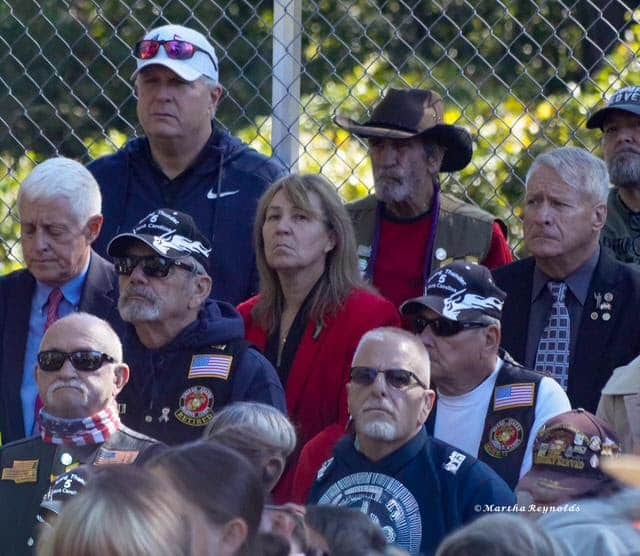
You are seeing a community keeping its promise to remember.
At the recent Beirut Memorial Observance, families, fellow service members, and friends gathered to honor those lost and stand alongside those who carry their memory. Each year, they return. The passing of time has not diminished the importance of being there.
Inside Carolina Museum of the Marine, our Beirut exhibit preserves another deeply personal connection: letters from home. Visitors often describe it as one of the Museum’s most compelling exhibits. Those letters bring us close to individual lives—to the people who wrote, the people who waited, and the everyday bonds that give remembrance its meaning.
The photograph and the letters ask something simple of us: remember with gratitude the people behind the history.
Never forget.
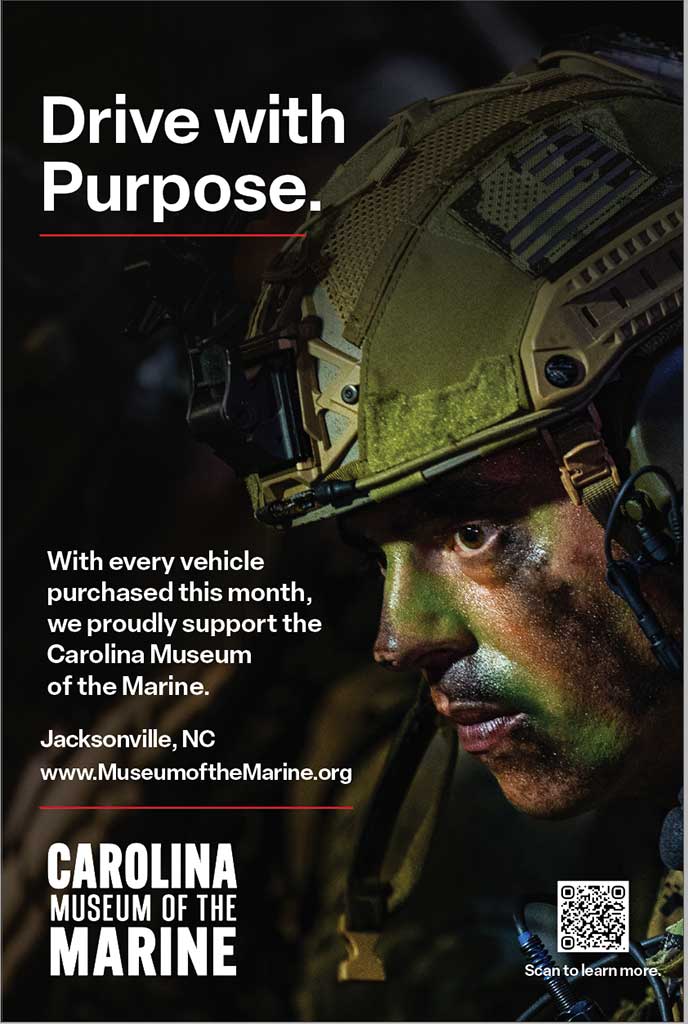
Shopping for a New Vehicle? Drive with Purpose.
Purchase a new vehicle this November at any of these participating dealerships, and the dealership will donate to the Carolina Museum of the Marine:
We’re grateful to these community partners—and their customers—for helping us honor service, preserve history, and inspire future generations.
Already planning to buy? Make November your month to Drive with Purpose.

Need Something? We’ve Made It Easier.
We’ve introduced dedicated email addresses to help connect you with the right member of our team. Whether you’re planning a visit, joining as a member, or supporting our mission, we’re here to help.
Planning a visit?
Hours, accessibility, parking?
Call 910-275-4408 or email
visit@museumofthemarine.org
Tours or Field Trips?
Membership questions?
Join, renew, replace a membership card, or update your information.
membership@museumofthemarine.org
Support the Museum
Donations, sponsorships, naming opportunities, and planned giving.
giving@museumofthemarine.org
Volunteer?
Learn about volunteer opportunities and how to get involved.
volunteer@museumofthemarine.org
Planning an event?
Rent the Great Hall, a classroom, or the entire museum for your special event.
RentTheMuseum@museumofthemarine.org
Media and Marketing
Interviews, press, photography, or promotional requests.
media@museumofthemarine.org
General Questions
We’re happy to help.
info@museumofthemarine.org
Copyright November 2026. Carolina Museum of the Marine
2026-2027 Board of Directors
Executive Committee
LtGen Mark Faulkner, USMC (Ret) – Chair
CAPT Pat Alford, USN (Retired) – Vice Chair and Treasurer
Mr. Mark Cramer, Esq. – Secretary
Col Joe Atkins, USAF (Retired)
LtGen Robert “Fuzzy” Hedelund, USMC (Ret)
MajGen Jim Kessler, USMC (Ret)
Col Bob Love, USMC (Ret)
Col Kipp Wahlgren, USMC (Ret), President and CEO, Ex Officio Board Member
In Memoriam: General Al Gray, USMC (Ret)
Members
Mr. Mike Bogdahn, US Marine Corps Veteran
MGySgt Osceola “Oats” Elliss, USMC (Ret)
Col Bruce Gombar, USMC (Ret) – Emeritus
LtCol Lynn “Kim” Kimball, USMC (Ret)
Richard McIntosh, USMC (Ret) – Emeritus
LtGen Gary S. McKissock, USMC (Ret) – Emeritus
Ms. Sandra Perez
Mr. Phil Randall, US Marine Corps Veteran
Mr. Cliff Renchen, US Marine Corps Veteran
The Honorable Robert Sander, Former General Counsel of the Navy
Mr. Billy Sewell
Col John B. Sollis, USMC (Ret) – Emeritus
Col Grant Sparks, USMC (Ret) – Emeritus