
Front and Center Newsletter – Vol. 5, No. 10, October 2026
Meet the Marine. Be Inspired.

Mission
Honor, preserve, and teach the legacy of Carolina Marines and Sailors.
Showcase the Marine example to inspire future generations.
Dear Friends of the Museum,
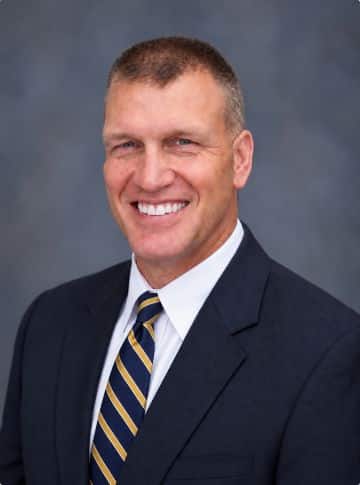
It is a privilege to join Carolina Museum of the Marine and become part of its mission to honor, preserve, and teach the legacy of Carolina Marines and Sailors. In these first weeks, I have been struck by both the extraordinary museum you have built and the people whose dedication made it possible.
The skill and care of our general contractor, architects, exhibit designers, and project manager are evident throughout the Museum. Equally impressive is the work of our small, hardworking staff—and the years of commitment from volunteers, donors, board members, public officials, and so many others who helped bring this vision to life. To everyone who has played a part, thank you. I am proud to join you in carrying this mission forward.
In the coming months, we will welcome Boots, Paws, and Hooves on the Ground: U.S. Marines and their Animals, a temporary traveling exhibition on loan from the Marine Corps Heritage Foundation, featuring images from the collection of the National Museum of the Marine Corps. The exhibition explores the history of animals serving alongside U.S. Marines, offering another way to discover the Marine story, and will be here through March 31, 2027. We are grateful to the Marine Corps Heritage Foundation and the National Museum of the Marine Corps for making it possible to share these stories with our visitors.
I look forward to meeting more of you, hearing your stories, and welcoming you to the Museum. Your continued involvement will help us build on this remarkable beginning and inspire generations to come.
Semper Fidelis,
Kipp Wahlgren
Colonel, USMC (Retired)
President and CEO

Beirut Memorial Observance
23 October | 10:30–11:30 a.m.
Beirut Memorial, Lejeune Memorial Gardens
Join our community for the annual Beirut Memorial Observance as we remember those who lost their lives in Beirut on October 23, 1983. This solemn gathering honors their service and sacrifice and the families, friends, and fellow service members who carry their memory forward.
We remember.
What Am I Seeing?
Pause. Look. Discover.

Photo by John Althouse.
Marine aviation at your fingertips
In the Meeting New Challenges Gallery, this immersive exhibit puts you in control of the exploration. Select an aircraft that interests you and watch it appear on the large screen. Then use the interactive table to explore its specifications and take a closer look at the capabilities behind the aircraft.
On your next visit, step up and explore.
Which aircraft will you choose?
Reading is Listening
Jim Danielson, PhD
Marine Veteran · Retired Professor of Ethics
It is a commonplace in the study of ancient Hellenic, mostly Athenian, thought that people at that time believed learning takes place most effectively in conversations between teacher and students. People used to comment on the assertion that the library in the University of Paris in the Middle Ages was a noisy place because everyone read aloud. The idea was that the text “stood in” for the teacher who couldn’t be there (often because he was dead), so the text was read aloud in order to hear the words being spoken. These examples demonstrate two important truths: first, that conversation is important to a civilized cultural tradition, and is indeed its life’s blood, and second, in conversation, listening is at least as important as speaking.
Certainly anyone today who went to a library and read out loud would be asked to stop, or leave, but the dynamic remains that when one reads an essay or a book, the reader is effectively listening to what the writer has to say on the topic under discussion. Much of what is said here is fairly obvious; reading is a form of listening, which is something many people do not do well, and therefore we do well to improve at it. In the newsletter for August we published an essay titled “Conversation and Disagreement” which discusses how to think of disagreement in conversation and to negotiate it in helpful ways. For September, we published “Critical Thinking and Worldview” which is intended to draw attention to worldview as the foundational layer in our thought, and to explain how one’s worldview goes far to determine how well he can think critically. This essay for the October issue of “Front and Center” is the third in a loosely bound series about what is required of us as human beings if we are to use our minds skillfully, critically, and consistently. It is concerned both with listening as an important element in conversation, and the need for reading as a means of avoiding the deception that surrounds us.
The least we can say of the importance of listening in conversation is that it is simple good manners. We have commented here several times that when one engages someone else in conversation, he incurs the obligation to be honest. For the sake of simplicity, we can imagine a conversation between two people. There are a number of interesting studies on the maximum number of people who can participate in a conversation and it remain a fruitful exercise beneficial to those taking part in it, but here we’ll consider two people talking together. Both parties to the conversation have the obligation to be honest and this duty necessitates the responsibility of each to listen to the other. Here, it is important to see that the purpose of listening to the other is to understand what that other person is saying in the way he means to be understood. It is not the purpose of “listening” to find points of contention. That’s not listening. It is when the parties to a conversation understand one another correctly that they may then offer whatever critiques are in order. The point here isn’t simply that listening in conversation facilitates disagreement, which it does, but it also facilitates learning and agreement.
Illustration used under license – iStock.
There is a deeper moral background to critical thinking and conversation that often goes unrecognized. It is important, for example, to exercise sufficient humility in conversation to be questioned and even disagreed with and not take offense. The same is true for many people in the matter of learning from others in conversation. Perhaps everyone has had the experience of either hearing a conversation or participating in one in which one or more of the participants seem to be competing. This is something different than a structured debate with a resolution for participants to debate with rules and a moderator. What this is, the practice of treating a conversation as a contest, is bad manners. (A lady calling herself “Miss Manners” gave a talk at the University of Virginia some years ago and made the remark that good manners are the front line of social morality.) It is important, then, to understand that a conversation is not a contest with a winner and a loser, but a consideration of ideas people may enjoy together and get such benefits as learning, helping someone else to learn, dispelling areas of ignorance, however small, and more. We can readily see then how it is that conversation can be the life’s blood of a civilized cultural tradition. This is denied to people who treat conversation as a contest, and in the zeal for victory, people generally don’t bother listening carefully to the other and may even fall victim to the temptation to “stretch” the truth. One thing the contestant will not do in “conversation” is to learn something. He’s not trying to learn; he’s trying to win, or to appear to have won.
Reading is listening with the possible exception that a reader cannot question a text in the same way the conversation partner can question the other. However, when we read, we expand enormously the range and number of people we can engage with. Some months ago, we published an essay here in “Front and Center” titled “Separating Truth from Propaganda.”[i] It was in part a consideration of an essay published in the journal Modern Age called “Propaganda-Proof Your Life.” In this article, the author discusses several things people can do to prevent themselves from falling for lies whether official or commercial. One thing we can do to protect ourselves against deception is to develop habits of personal discipline. Most readers of this newsletter will know what this piece of advice means, but the author of “Propaganda-Proof Your Life” offers three areas in which personal discipline can be improved, but unhappily he didn’t explain or develop them very well. The first area is moral discipline which the author defined as “developing a moral compass.” This is not very helpful, but perhaps we can be a bit more helpful by saying that we can seek ever better to develop the virtue of prudence, which is the virtue by which one consistently understands in any set of circumstances what is the right thing to do. This may also seem a bit vague, but as we’ll see, developing the virtue of prudence is greatly abetted by reading. Discipline over one’s time is found in seeking to use time productively in terms of exposure to good influences, and seeking in general to continue learning. It is difficult to deceive someone who is knowledgeable because the process of learning brings with it increasing discipline in thinking and analyzing. These skills allow someone to think through a claim one hears and to judge its reliability. Physical discipline is understood to be good not just for keeping oneself fit, but physical discipline is an important support to intellectual discipline and agility.

Illustration used under license – iStock.
t is important to read books, because propaganda “uses the events of the day or the feelings of the moment to manipulate the thoughts of victims before they have a chance to think.” Owing to the publishing process and the time it requires, reading books removes us from the heat of the moment and imposes on us the discipline of thinking carefully. Importantly, when a book is published, critics go to work analyzing the arguments in the book for their strengths and weaknesses. An effective practice when reading a book is to read a few reviews of it, for these will alert you to things to watch for when reading the book. It is important to read, but what one reads matters. The suggestion is often made that we should read history because one technique of propagandists among us is shoot out “facts” at people at a rapid rate. This keeps people’s minds in the moment, and it is confusing. There is a useful fashion now of distinguishing “thinking fast” from “thinking slow.” People in the business of deception want to keep others thinking “fast” because when people take the time to think “slow,” they can identify the holes in a story. But when constantly thinking fast, one’s focus is on what is being said, but not so much on what it means. While it is important to be a student of history, it is important also to be very careful about the sources one reads. The reason for this is told to us, for example, in literature where characters will say things like “The present needs a past to justify it.” Yes, much of our official scholarly history is misleading, but there are other places people may go, like the Liberty Fund, to find excellent books at reasonable prices.[ii]
Reading is listening because when one reads he must pay attention in order to understand what the author is saying. Even then, it is always useful to discuss what one reads in conversation with others where we learn ever better to negotiate disagreement, and to understand the working of worldview in one’s thinking process.
[i] We used the word “propaganda” to mean claims that are knowingly false.
[ii] The website of the Liberty Fund may be found here: https://about.
Oscar Alpha:
Out and About with the Museum
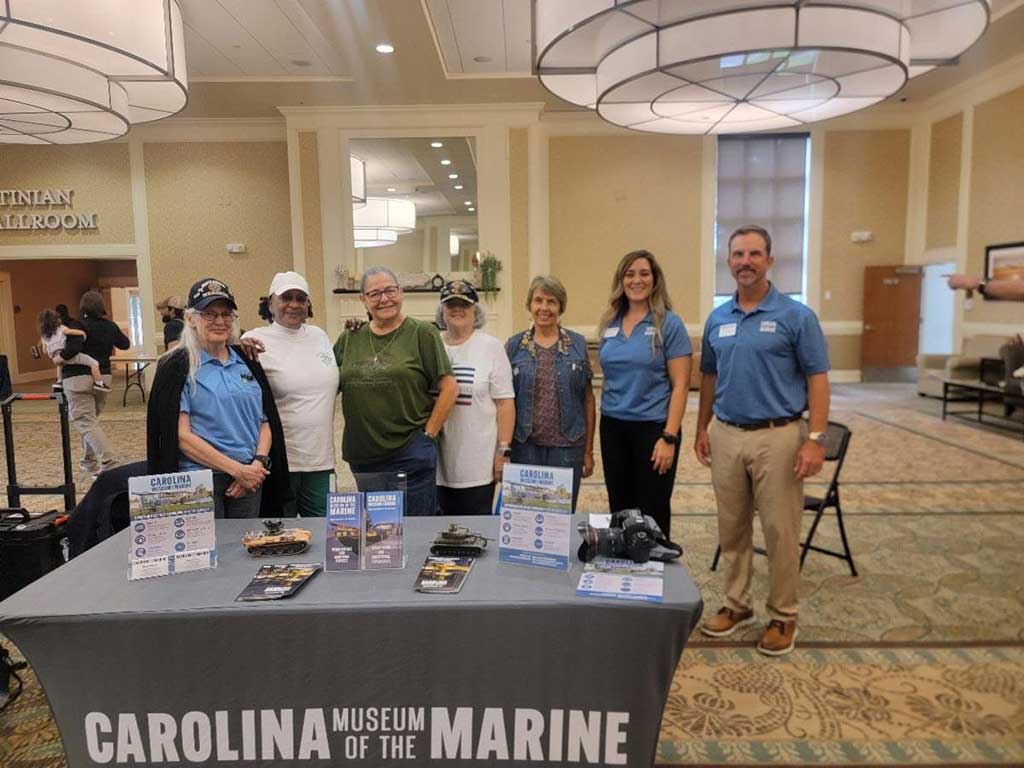
Docents, volunteers, and staff represented the Museum at the recent Retiree Appreciation Health Fair.
Pictured from left to right: Frances Hayden, Alvinice Muhammad, Dolores Luhm, Martha Reynolds, Brenda Johnson, Brittany Stevenson, Mike Johnson.
We thank them for representing the Museum with excellence.

Need Something? We’ve Made It Easier.
We’ve introduced dedicated email addresses to help connect you with the right member of our team. Whether you’re planning a visit, joining as a member, or supporting our mission, we’re here to help.
Planning a visit?
Hours, accessibility, parking?
Call 910-275-4408 or email
visit@museumofthemarine.org
Tours or Field Trips?
Membership questions?
Join, renew, replace a membership card, or update your information.
membership@museumofthemarine.org
Support the Museum
Donations, sponsorships, naming opportunities, and planned giving.
giving@museumofthemarine.org
Volunteer?
Learn about volunteer opportunities and how to get involved.
volunteer@museumofthemarine.org
Planning an event?
Rent the Great Hall, a classroom, or the entire museum for your special event.
RentTheMuseum@museumofthemarine.org
Media and Marketing
Interviews, press, photography, or promotional requests.
media@museumofthemarine.org
General Questions
We’re happy to help.
info@museumofthemarine.org
Copyright October 2026. Carolina Museum of the Marine
2026-2027 Board of Directors
Executive Committee
LtGen Mark Faulkner, USMC (Ret) – Chair
CAPT Pat Alford, USN (Retired) – Vice Chair and Treasurer
Mr. Mark Cramer, Esq. – Secretary
Col Joe Atkins, USAF (Retired)
LtGen Robert “Fuzzy” Hedelund, USMC (Ret)
MajGen Jim Kessler, USMC (Ret)
Col Bob Love, USMC (Ret)
Col Kipp Wahlgren, USMC (Ret), President and CEO, Ex Officio Board Member
In Memoriam: General Al Gray, USMC (Ret)
Members
Mr. Mike Bogdahn, US Marine Corps Veteran
MGySgt Osceola “Oats” Elliss, USMC (Ret)
Col Bruce Gombar, USMC (Ret) – Emeritus
LtCol Lynn “Kim” Kimball, USMC (Ret)
Richard McIntosh, USMC (Ret) – Emeritus
LtGen Gary S. McKissock, USMC (Ret) – Emeritus
Ms. Sandra Perez
Mr. Phil Randall, US Marine Corps Veteran
Mr. Cliff Renchen, US Marine Corps Veteran
The Honorable Robert Sander, Former General Counsel of the Navy
Mr. Billy Sewell
Col John B. Sollis, USMC (Ret) – Emeritus
Col Grant Sparks, USMC (Ret) – Emeritus