
Front and Center Newsletter – Vol. 5, No. 05, May 2026
Meet the Marine. Be Inspired.
Opening June 8, 2026
Lejeune Memorial Gardens | Jacksonville, NC

Mission
Honor, preserve, and teach the legacy of Carolina Marines and Sailors.
Showcase the Marine example to inspire future generations.
Message from the President and CEO
Dear Friends of the Museum,
As we stand on the threshold of opening the Carolina Museum of the Marine, we mark more than the completion of a building—we fulfill a promise more than a quarter century in the making. This moment belongs to every individual who believed, contributed, and persevered when the outcome was far from certain. It is, at its core, a story of values lived—not simply spoken—the enduring values of the United States Marine Corps: Honor, Courage, and Commitment.
Honor has guided this effort from the very beginning. Honor is not abstract—it is the quiet, unwavering decision to do what is right, even when no one is watching. Over the past 26 years, Honor has been reflected in the integrity of those who safeguarded this vision through leadership transitions, economic uncertainty, and changing circumstances. It is seen in the careful stewardship of donor trust, the respect shown to the stories entrusted to us, and the solemn responsibility we carry to properly represent the legacy of Carolina Marines and Sailors. Every decision—what to build, what to preserve, what to say—has been measured against a single standard: is it worthy of those who have served?
Courage has been equally essential. Courage is not the absence of doubt—it is the willingness to move forward despite it. There were moments when this project could have stalled, when obstacles—financial, logistical, and institutional—seemed insurmountable. It took courage for early visionaries to begin when there was no guarantee of success. It took courage for leaders to make difficult calls, to recalibrate plans, and to press forward when the path was unclear. It took courage for donors to invest, for partners to commit, and for this team to carry the weight of expectation knowing that the mission demanded nothing less than success. This museum exists because people chose to act, not retreat.
Commitment is what sustained us. Commitment is endurance over time—the refusal to let a worthy cause fade. For 26 years, individuals and organizations returned to this effort again and again, giving their time, resources, and belief. It is reflected in countless hours of planning, fundraising, design, construction, and collaboration. It is seen in those who never allowed this vision to be reduced to “someday,” but instead carried it forward year after year until “someday” became now. Commitment is what transformed an idea into a place—one that will stand for generations.
As we prepare to open our doors, we do so with profound gratitude and a deep sense of responsibility. This museum is not the end of the journey—it is the beginning of a new mission: to honor, preserve, and teach the legacy of the Carolina Marines and Sailors, and to inspire future generations through their example.
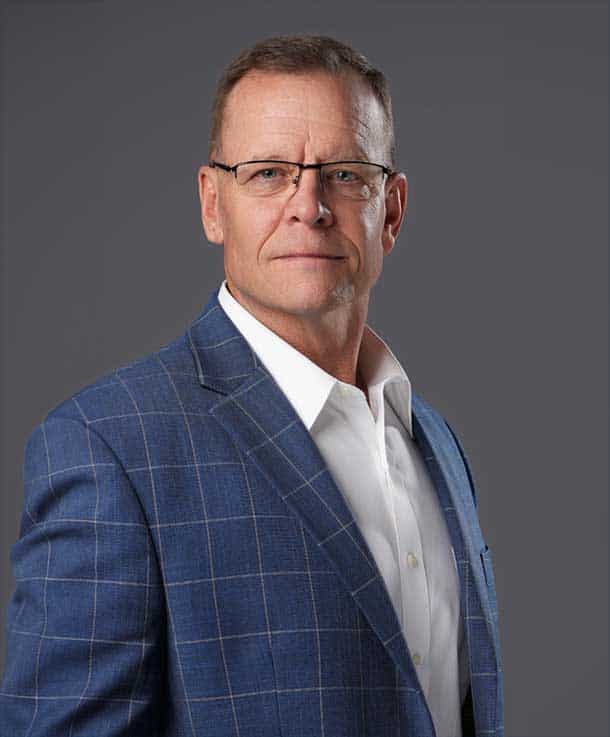
Semper Fidelis,
Joe Schrader
Major General, USMC (Retired)
President and CEO
Remarks at a Milestone
on our Journey
Jim Danielson, PhD
Marine Veteran
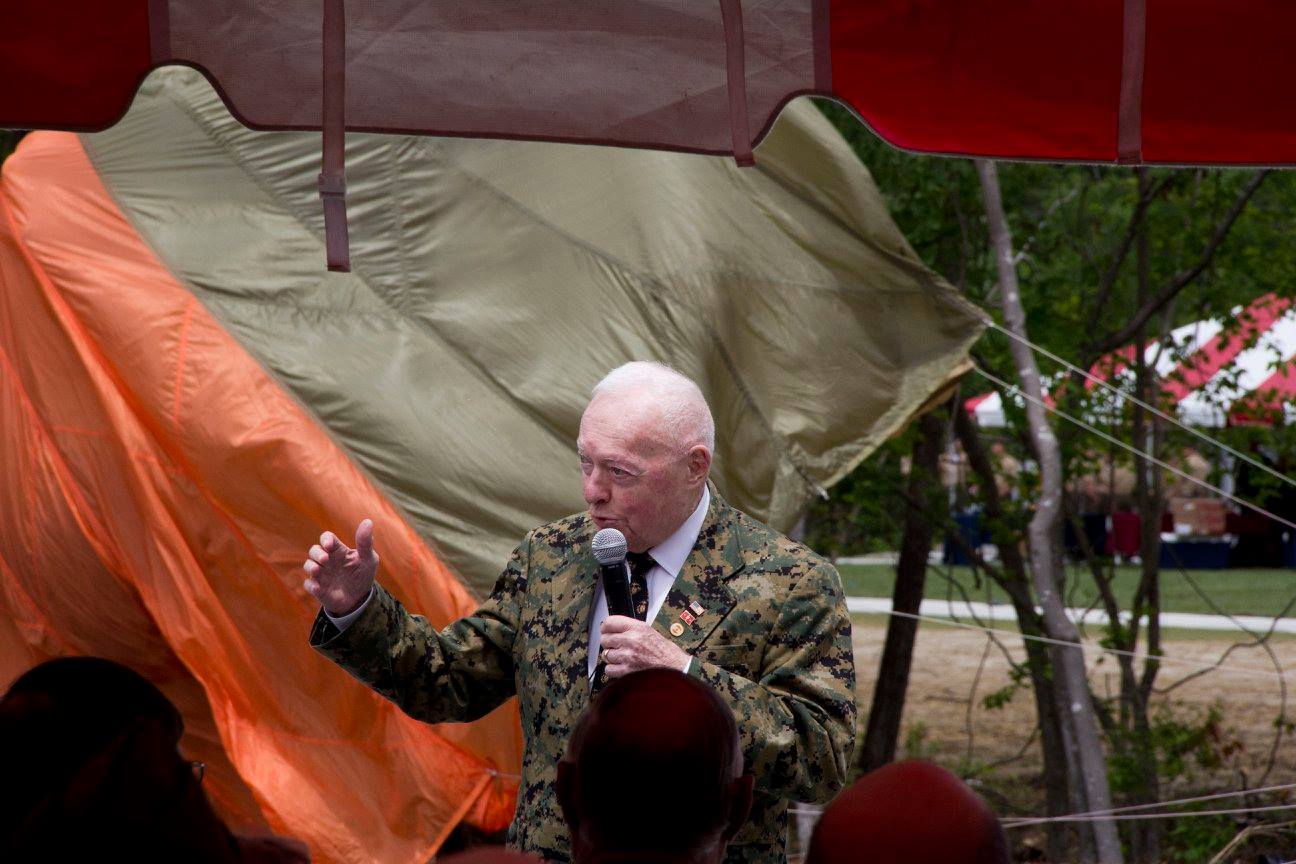
On 6 May 2016, the Reflection and Celebration Park in Lejeune Memorial Gardens was dedicated at what is now Carolina Museum of the Marine. Dedicatory remarks were given by General Al Gray who began by saying: “Thank you for the great introduction and more importantly for the opportunity to come back home to the place that’s very close to my heart and my wife Jan’s heart and it’s great to see so many of you and it’s just great to be with you and it’s particularly a privilege to participate in this dream…reality…. The idea of having a museum for the Marines and talking about the Carolina Marine Air Ground Task Force, which is really an air ground logistics team under a single commander, that is just I think phenomenal and it is one I believe that will go down in history as something you’re all going to be proud of and you’re all going to be proud of being part of it. The Carolina MAGTF idea really has its genesis in Feb. 1954 when the then Commandant Gen Shepard made the statement that we really need to think about being a Marine air ground task force, we really need to be a Marine MAGTF, if you will. We have long been the experts in Close Air Support and in supporting ground troops and all that. That was our heritage, that’s what we did. But he said that we’ve got to put it together now, particularly with Marine air groups, and ground troops and of course the logistics people that make it all happen, and again under a single commander. And so they came up with something they called the 2nd MAGTF and it was located here in Camp Lejeune. And it had its first exercise in April 1954 and the like where they began in concert with the Navy to think through these concepts and think through these ideas which eventually became doctrine.” Gen. Gray delivered these remarks about seventeen years after the idea was first formulated of a museum to remember the achievements and contributions of Carolina Marines and Sailors. But in May of 2016, the museum remained an unattained goal. Today, Carolina Museum of the Marine is an achieved reality that will open to the public on Monday 8 June 2026.
As General Gray continued his comments, he said: “When they refined the helicopter doctrine actually it started in 1948 and of course came to fruition in Korea and the like but the real idea of landing from ships to go ashore and land by helicopter that idea really came about a little bit later and the very first helicopter landing carrying troops from ship to shore happened here at Onslow Beach, under Colonel Keith McCutcheon, who later became a general, head of aviation, but these are the historical kinds of things that we can go back to and we can bring up if you will in terms of the museum and the thinking and concepts and the like. As you know we developed the Harrier aircraft along the way in the late 50s and 60s and people like General Miller the old aviation commander and the like flew the first Harriers in England but the very first testing of the Harrier concept in 1972 where company commanders and battalion commanders would go up to pilots in the field and tell them what they needed and the pilots would take off and run the mission. The very first concepts were tested here in the spring of 1972 right here at Camp Lejeune. That’s just one more historical kind of thing that happened.
As General Gray continued speaking he developed, rather like a collage, a picture of the accomplishments of Carolina Marines and Sailors, at times in cooperation with west-coast Marines, that constitutes the ongoing history that Carolina Museum of the Marine exists to remember. “Also in 1972 the very first large brigade exercise was held at 29 Palms and that one consisted primarily of forces from Camp Lejeune, Cherry Point, New River, and Beaufort, SC, as well as from the west coast. It was the first time that the Marine Corps had put Marines from the Pacific command if you will and Marines from the Atlantic command together at 29 Palms and they ran the first brigade-sized, mechanized exercise. Marines from the 2d Marine Division using the old amtracs, the LVT-5s, remember those, they’re almost as old as you, right? They were so old that when you ran them around twenty miles or so, they were so hot that you could fry an egg on the hood of the amtrac. But this exercise they took these amtracs with Marine warriors 60 miles the first day in the desert. It was the first large scale mechanized kind of a thing we had ever done really and it paved the way, set the scene for later operations in NATO and the like where we had to conduct these kinds of operations.”
One interesting element in General Gray’s discussion of the Carolina Marines and Sailors is bringing into light the fact that the Carolina MAGTF has developed its capabilities over time and in ways that make Marines ever better at what the Corps exists to do. “In 1976 the Commandant, General Wilson, who was awarded the Medal of Honor on Guam, was adamant that we could demonstrate to the world that we were in fact a good capable force that could reinforce NATO in Europe. We had been criticized and we had really not done very well over there. Technically we were the strategic reserve for NATO in those days with the 82nd Airborne. But people really didn’t know what the MAGTF could do, what it was really capable of doing. And so he formed the first permanent Marine brigade since WWI, the 4th Marine Amphibious Brigade, and he formed that force and he gave it the mission of making sure that Europe and everyone else our allies knew just how good we could be and what we could do and how we would use our air and show the Air Force and everyone else how we employ our air under a single commander. And what did he do he chose forces from Camp Lejeune, Cherry Point and Beaufort, the Carolina MAGTF, to make this happen and they did in 1976, 1977, 1978 and the rest of the 70s and 80s he made the Marine Corps totally valuable if you will to our European allies and the like.”
When he turned his attention to a discussion of maneuver warfare, General Gray proved that the Carolina MAGTF, for all its skill and capability, has also a sense of humor. “But it was really here at Camp Lejeune where the whole maneuver warfare thought process took place. And it was the young Marines, officers, Sailors and the like of the Carolina MAGTF that made it happen. They conducted for several years three types of exercise and the like. The idea was not to have approval from higher headquarters. The idea was to make it happen on the ground here because if you get the higher headquarters involved it’s likely to get disapproved. Higher headquarters is your natural enemy. You younger Marines out there in the audience still on active duty remember this: never provide any gratuities to higher headquarters, simply answer the question as quickly as you can. That was always my theme and it was very successful, except when I became higher headquarters, then I stopped saying it, but that’s another topic. But the point I want to make is that we sold the idea in the field, first in the Carolina MAGTF and later throughout the Corps. And I’ll tell you how it worked.
Returning Good Citizens
Answering the Call – Again and Again
General Al Gray believed that the Marine Corps must return good citizens to the communities they serve. Our Returning Good Citizens series highlights supporters whose extraordinary generosity and leadership—often through named gifts—reflect the values of service, leadership, and community that define the spirit of Carolina Marines and Sailors. We are proud to recognize those whose support is helping bring the Museum to life.
This month, we are honored to feature:
A Lifetime of Service:
Phil Randall
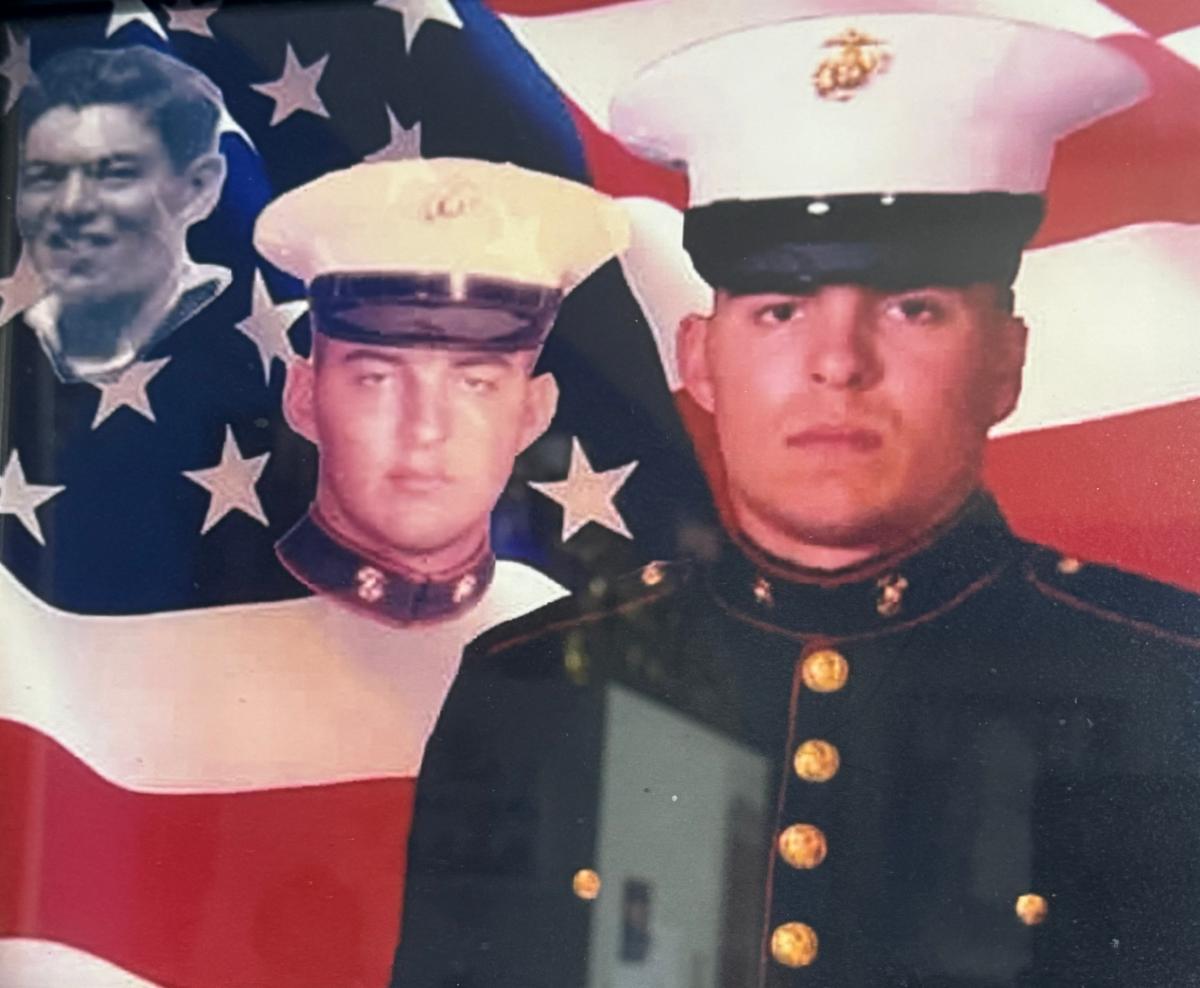
Service did not end when Phil Randall left the United States Marine Corps. It simply took new forms.
A Marine veteran whose early career included aviation maintenance on a range of Marine Corps aircraft, Phil went on to devote more than four decades to advancing aviation safety, maintenance standards, and professional training across the nation. After his Marine service, he continued in the aviation field with airlines and maintenance organizations before rising to senior leadership within the Federal Aviation Administration. There, he served in key roles focused on airworthiness, technician training, accident prevention, and human factors—work that helped strengthen aviation safety throughout the United States and Puerto Rico. His distinguished career included receiving the prestigious Charles Taylor Master Mechanic Award, one of aviation’s highest honors.
Yet Phil’s commitment to service extended well beyond his professional life. He continued to serve fellow Marines and veterans through years of leadership in the Marine Corps League, including as Commandant of the Marine Corps League’s PFC Jerry L. McKinney Detachment from 2014 to 2024.
That spirit of continued service now benefits the Carolina Museum of the Marine. Earlier this month, Phil was elected to the Museum’s Board of Directors, bringing with him a lifetime of leadership, discipline, and dedication to mission.
He has also become an active ambassador for the Museum across North Carolina’s Piedmont region, opening doors and building relationships with individuals, organizations, and businesses who share a belief in honoring service and inspiring future generations.
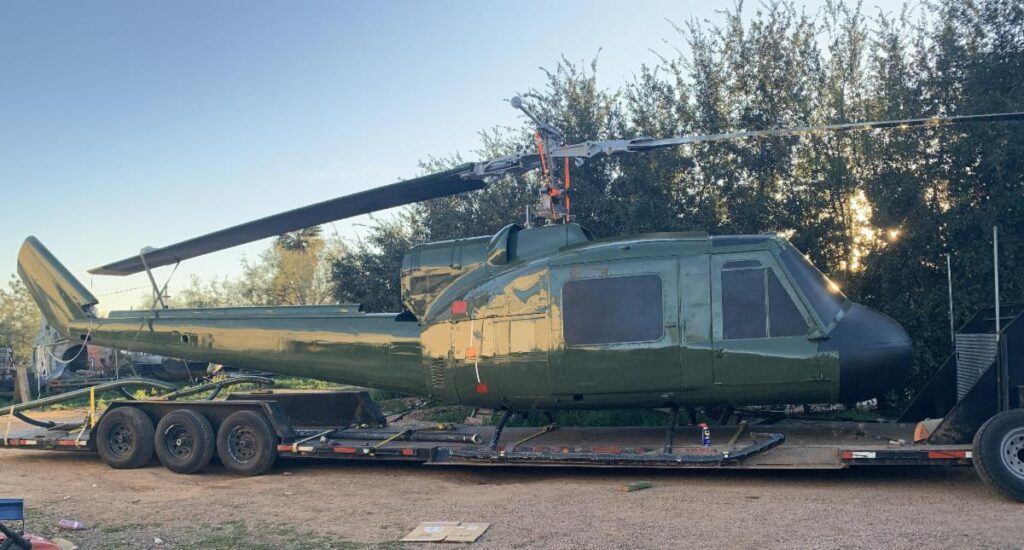
Phil’s recent leadership commitment to sponsor the Historic Huey Helicopter Exhibit in Gallery 3, Meeting New Challenges, reflects both his lifelong connection to Marine aviation and his continuing desire to give back.
His family’s tradition of service runs deep. Among those who inspired him was his uncle, Sergeant Major James B. Luckadoo, USMC, who served as Sergeant Major of Marine Corps Air Station New River. Today, that legacy continues through another generation, including a nephew currently serving as a Captain at New River.
The Carolina Museum of the Marine is honored to welcome Phil Randall as a board member, supporter, and champion of the mission.
Some Marines never stop serving. Phil Randall is one of them.
Continue the Legacy
The story you just read is one of many preserved by the museum. The Carolina Museum of the Marine is dedicated to preserving the stories of Carolina Marines to inspire future generations.
Explore more Meet the Marine stories and interviews from the museum’s growing archive.
Become a Member
Today, a new chapter begins.
General Memberships are now open as the Carolina Museum of the Marine prepares to welcome the public on June 8.
Be among the first to join a community committed to honoring the service and sacrifice of Carolina Marines and Sailors while helping inspire future generations.
When you become a member, you do more than enjoy admission benefits. You help sustain powerful exhibits, preserve stories entrusted to this Museum, and support leadership and civic education through the Al Gray Marine Leadership Forum.
This Museum was built by people who believed service, sacrifice, and citizenship should never be forgotten.
Now, membership is your opportunity to carry that mission forward.
Join today. Visit often. Stand with the mission.
VISIT OUR ONLINE GIFT SHOP!

https://www.istockphoto.com/portfolio/SARINYAPINNGAM?mediatype=photography
Be part of opening day.
Your gift fuels the final steps toward June 8 and sustains the Museum as we welcome Carolina Marines, Sailors, families, and visitors from across the nation. Together, we open the doors to service, leadership, and legacy.
Copyright, May 2026. Carolina Museum of the Marine
2025-2026 Board of Directors
Executive Committee
LtGen Mark Faulkner, USMC (Ret) – Chair
Col Bob Love, USMC (Ret) – Vice Chair
CAPT Pat Alford, USN (Ret) – Treasurer
Mr. Mark Cramer, JD – Secretary
In Memoriam: General Al Gray, USMC (Ret)
MajGen Jim Kessler, USMC (Ret)
Col Grant Sparks, USMC (Ret)
MajGen Joe Shrader, USMC (Ret), President and CEO, Ex Officio Board Member
Members
Col Joe Atkins, USAF (Ret)
Mr. Mike Bogdahn, US Marine Corps Veteran
Mr. Keith Byrd, US Marine Corps Veteran
MGySgt Osceola “Oats” Elliss, USMC (Ret)
Col Bruce Gombar, USMC (Ret)
LtGen Robert “Fuzzy” Hedelund, USMC (Ret)
LtCol Lynn “Kim” Kimball, USMC (Ret)
CWO4 Richard McIntosh, USMC (Ret)
LtGen Gary S. McKissock, USMC (Ret)
Ms. Sandra Perez
Mr. Phil Randall, US Marine Corps Veteran
The Honorable Robert Sander, Former General Counsel of the Navy
Mr. Billy Sewell
Col John B. Sollis, USMC (Ret)
Staff
MajGen Joe Shrader, USMC (Ret), President and Chief Executive Officer
Ashley Danielson, VP of Development
SgtMaj Steven Lunsford, USMC (Ret), VP of Operations
CWO5 Lisa Potts, USMC (Ret). Curator
CWO3 Charles McCawley, USMC (Ret) Finance and HR Manager
Sarah Williams, Docent and Volunteer Manager
Melody Tidwell, Admissions and Retail Manager
Ashlee Escareno, Events and Facilities Manager
Alexandra Price, Curatorial Assistant