The Importance of Critical Thinking
On January 6, 1816, Thomas Jefferson, having retired from public life, wrote to a friend named Charles Yancey saying in part: “If a nation expects to be ignorant & free, in a state of civilization, it expects what never was & never will be. The functionaries of every government have propensities to command at will the liberty & property of their constituents. There is no safe deposit for these but with the people themselves; nor can they be safe with them without information. Where the press is free and every man able to read, all is safe.” Large ideas that are communicated concisely and in narrow scope are always subject to question and even hesitation, but Jefferson’s point here is clear. In order for people to take sound decisions concerning themselves and their families, they must accurately be informed. This requires that people are able to read skillfully, but also, and importantly, that people who engage in conversation with others, and especially in public discourse, speak and write honestly.
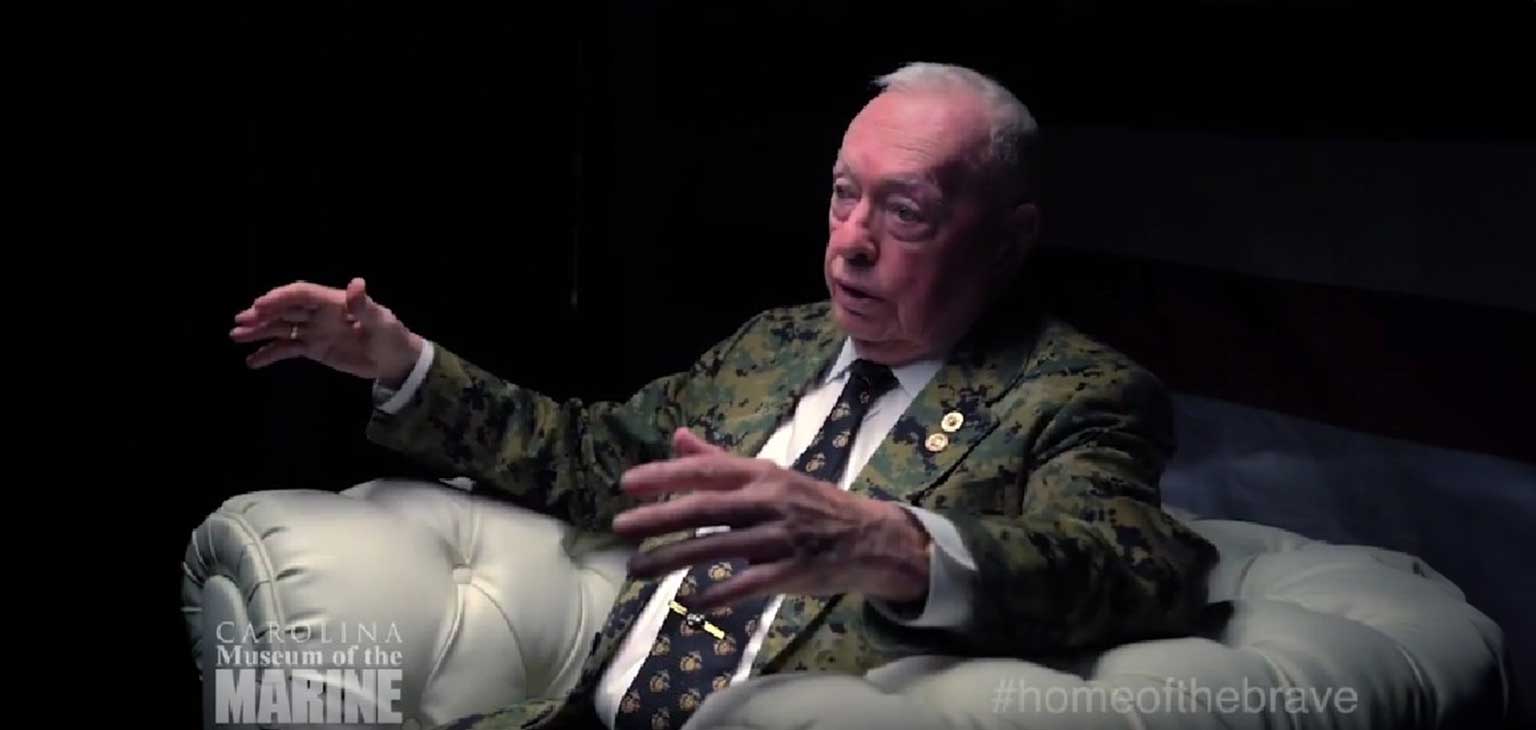
This process of speaking and writing honestly requires that people develop and practice the ability to think carefully and critically. In a written communication some years ago, General Gray described critical thinking this way. “There are many definitions of this complex topic. For me it is the study and analysis of problems, issues and facts to develop and form a sound judgment. It involves evaluation of the facts or evidence bearing on the problem or issue. It is self-directed, self-disciplined, self-monitored, and self-corrected thinking,… Our intent, in part, is to draw upon Carolina Marine experiences in terms of the development of our Warfighting Philosophy and our Leadership Thoughts.”
As General Gray presents the practice of critical thinking it begins with “study and analysis,” and this at levels suited to the matter under consideration, and this practice of study and analysis is the process Thomas Jefferson alludes to when he identifies the importance of adequate information to taking sound decisions. It is important to consider that in order to think and to speak critically with consistency, the skill involves not just intellectual discipline but also inwardly possessed moral order since it is from this that one maintains the determination always to communicate honestly with others. Among the nearly limitless examples we could use to illustrate this truth is one we have used before, though for a different purpose, namely the oaths taken by Marines and Sailors when they enter into military service.

Upon entering the Marine Corps or the Navy, a prospective officer takes the following oath. “I (name), having been appointed a (rank) in the United States (Marine Corps or Navy), do solemnly swear (or affirm) that I will support and defend the Constitution of the United States against all enemies, foreign and domestic; that I will bear true faith and allegiance to the same; that I take this obligation freely, without any mental reservation or purpose of evasion; and that I will well and faithfully discharge the office upon which I am about to enter. So help me God.” Enlisted Marines and sailors take the following oath. “I (name), do solemnly swear (or affirm) that I will support and defend the Constitution of the United States against all enemies, foreign and domestic; that I will bear true faith and allegiance to the same; and that I will obey the orders of the President of the United States and the orders of the officers appointed over me, according to regulations and the Uniform Code of Military Justice. So help me God.”
What stands out first in both of these oaths is the pledge to “support and defend the Constitution of the United States against all enemies, foreign and domestic;…” Of course, enemies of the Constitution are in fact enemies of the way of life defended by our Constitution that establishes a governing order of restraint and limited power that provides for a free people to govern themselves according to their own customs and traditions. This is natural to us as human beings as well as Americans because the things people have always been willing to risk themselves to defend are God, family, country, and their valued and shared ways of life. This makes clear sense of the next part of the oath to “bear true faith and allegiance to the same.” To support and defend that Constitution is a call to certain kinds of action, and to bear true faith and allegiance identifies the inner moral disposition one must possess or otherwise develop, since it is from this true faith and allegiance that a Marine or a Sailor is motivated to support and defend.
In order for Marines and Sailors to fulfill this part of their oaths they do well to develop such traits of a Marine leader as a sense of justice by which one may understand the behaviors that express allegiance to the Constitution of the United States and the way of life it exists to defend. Judgment is needed in order consistently to act justly, and this is made more certain by the personal quality of dependability. The possession of integrity is the possession of a sense of honor by which it would be unthinkable to act in ways that are faithless or cowardly, and so we can understand why a leader must possess courage and loyalty. And certainly, to take an oath freely, without any purpose of evasion, is simply to be who one appears to be, and this is a quality of someone able to bear true faith and allegiance to a cause bearing high purpose. Doing all of this well is fundamentally the fruit of the ability consistently to think critically.
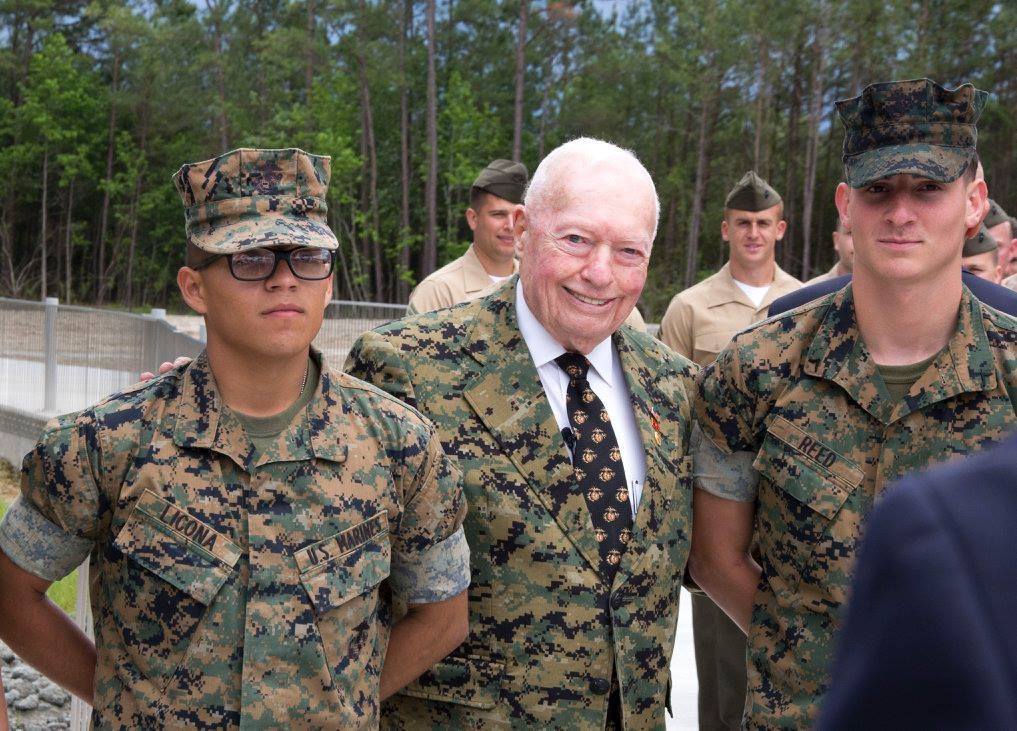
People who have been alive for a while, as many of the patriots associated with Carolina Museum of the Marine have been, understand from experience that a bracing characteristic of life lived within the discipline of a well-wrought tradition is personal growth that is at once intellectual, moral, and spiritual. We have also experience of people who are perfectly fine and well-meaning but who, over the course of their lives, have grown as human beings very little, if at all. This is a concern we have written about here quite a bit because growth as a human being is an integral part of a full and happy life, and because the more well-developed people in a society, the better that society will be. Addressing this issue was an important concern for General Gray, and it was central to his decision to join with us at Carolina Museum of the Marine.
With this issue of “Front and Center,” we embark upon a new year. Among the signs of a year’s end and the start of a new one about which people might be ambivalent are year-end round-ups and predictions for the coming year. We won’t do either of these, but this is the year that Carolina Museum of the Marine opens to the public, and we should not fail to take note of this important and rapidly approaching event. So then: the Museum opens this year, and from the moment it commences operations people may enjoy the multi-faceted celebration of the achievements and contributions to our country of the Marines and Sailors of the Carolinas, and the lessons for citizenship and for life that we find among them.