
Front and Center Newsletter – Vol. 5, No. 7, July 2026
Meet the Marine. Be Inspired.

Mission
Honor, preserve, and teach the legacy of Carolina Marines and Sailors.
Showcase the Marine example to inspire future generations.
Dear Friends of the Museum,
As we celebrate Independence Day, we join our nation in commemorating the 250th anniversary of the birth of the United States of America. For two and a half centuries, the ideals of liberty, service, sacrifice, and freedom have defined our nation and inspired generations of Americans to answer the call to serve. At the Carolina Museum of the Marine, we are honored to preserve and share the stories of the Marines and Sailors who have defended those ideals throughout our nation’s history. As you gather with family and friends this Fourth of July, I encourage you to take a moment to reflect on the sacrifices made by so many to secure the freedoms we enjoy today.
June also marked a historic milestone for the Carolina Museum of the Marine. Thanks to the incredible support of our members, donors, volunteers, community partners, and visitors, our Grand Opening exceeded every expectation. During our first month, we welcomed more than 4,500 visitors, and the excitement surrounding the Museum has been nothing short of extraordinary. We have been humbled by the enthusiastic response, the encouraging comments from guests, and the pride our community has shown in this remarkable new institution.
While we are proud of this successful beginning, we know it is only the start. Every visitor who walks through our doors, every membership purchased, every donation made, and every conversation shared helps us fulfill our mission to honor the legacy of Carolina Marines and Sailors while inspiring future generations through education, leadership, and service.
Thank you for making our Grand Opening truly grand. Your enthusiasm, encouragement, and continued support are helping establish the Carolina Museum of the Marine as a destination that our community and our nation can be proud of.
We invite you to keep the momentum going. Bring your family, invite your friends, encourage others to visit, and continue sharing your experiences with others. Together, we are building something truly special.
On behalf of our Board of Directors, staff, and volunteers, thank you for your unwavering support, and best wishes for a safe and memorable Independence Day.

Semper Fidelis,
Joe Schrader
Major General, USMC (Retired)
President and CEO
Opening Day Reflections
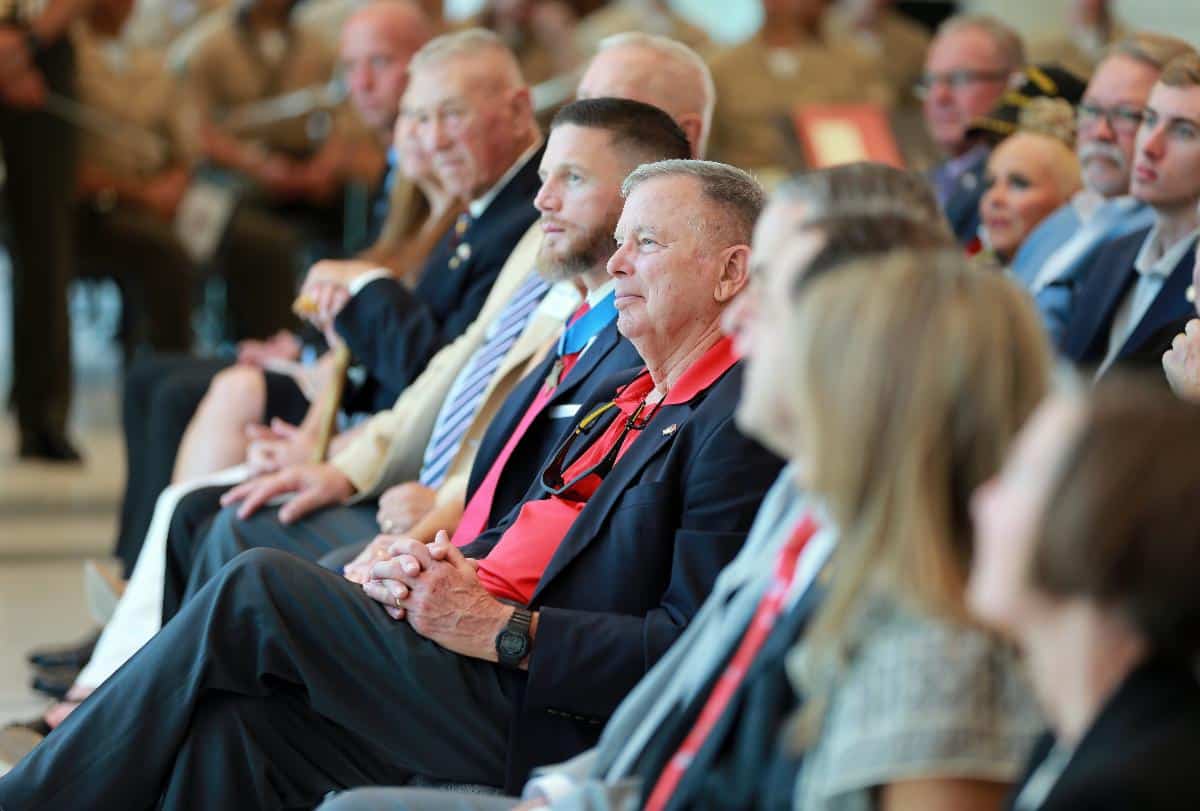
More than twenty-five years of vision, dedication, and community support culminated in the opening of the Carolina Museum of the Marine on June 8. While the ceremonies marked a historic milestone, some of the most meaningful moments came from the people who experienced the day firsthand.
Watch this short video to hear Opening Day reflections from visitors and supporters as they share what the Museum—and the legacy of Carolina Marines and Sailors—means to them. Watch Opening Day Reflections.
When in the Course of Human Events:
The Declaration of Independence at 250
Jim Danielson, PhD
Marine Veteran
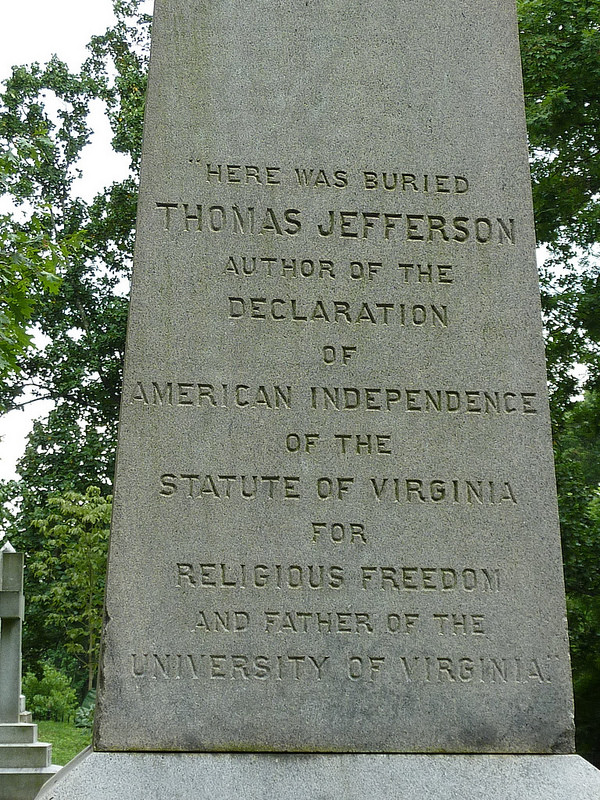
It is well known that Thomas Jefferson is the principal author of the Declaration of Independence. Jefferson’s gravestone at Monticello reads: “Here was buried Thomas Jefferson author of the Declaration of American Independence, of the Statute of Virginia for Religious Freedom, and Father of the University of Virginia.” It seems that Mr. Jefferson was prouder of having written the Declaration of American Independence than he was of having been president of the United States. Thomas Jefferson died on July 4, 1826, 50 years after the publication of the Declaration. On the 4th of July this year, 2026, Americans will celebrate 250 years of independence from Britain, and it will have been 200 years since Thomas Jefferson died. It seems a fitting exercise, therefore, to consider our Declaration of Independence with attention to the concept of independence that is defended there.
The opening paragraph of the Declaration states its purpose eloquently: “When in the Course of human Events, it becomes necessary for one People to dissolve the Political Bands which have connected them with another, and to assume among the Powers of the Earth, the separate and equal Station to which the Laws of Nature and of Nature’s God entitle them, a decent Respect to the Opinions of Mankind requires that they should declare the causes which impel them to the Separation.” We may observe at first the assumption, suggested by Jefferson’s tone, that settled political arrangements should not be changed lightly.[i] This is verified a little later when Jefferson writes that “…all Experience hath shewn, that Mankind are more disposed to suffer, while Evils are sufferable, than to right themselves by abolishing the Forms to which they are accustomed.” Freedom is important to human flourishing because it is our nature to be free, and because growth as a human being happens when one freely chooses it, and pursues it. We have occasion, not infrequently, to recall the first principle of Marine Corps leadership: “Know yourself, and seek self-improvement.” We can and should acknowledge the importance of freedom to human happiness, but we should acknowledge also the importance of order as the necessary guide to the beneficial uses of freedom. This is discussed interestingly by Russell Kirk at the opening of his essay, cited above, titled “Prescription, Authority, and Ordered Freedom:” “Civilized man lives by authority; without some reference to authority, indeed, no form of human existence is possible. Also man lives by prescription—that is, ancient custom and usage, and the rights which usage and custom have established. Without just authority and respected prescription, the pillars of any tolerable civil social order, true freedom is not possible.”[ii]
This important balance between order and freedom is what Jefferson is referring to when he observes that experience has shown us that people will suffer evils while they are tolerable, but lying behind this observation is the very American assertion, soon to be made clear, that sovereign governing authority lies with the people who are governed.[iii] It is possible, however, for people to be pushed by a government to the place where evils are no longer tolerable. This is the “tipping point” Jefferson identifies when he writes: “But when a long Train of Abuses and Usurpations, pursuing invariably the same Object, evinces a Design to reduce them under absolute Despotism, it is their Right, it is their Duty, to throw off such Government, and to provide new Guards for their future Security. Such has been the patient Sufferance of these Colonies; and such is now the Necessity which constrains them to alter their former Systems of Government.” This quote is taken from the second paragraph of the Declaration which appears just after Jefferson expresses, in one sentence, the essence of the American theory of government, which, in the spirit of celebrating 250 years of the Declaration of Independence, we will air in full.
“We hold these Truths to be self-evident, that all Men are created equal, that they are endowed by their Creator with certain unalienable Rights, that among these are Life, Liberty, and the Pursuit of Happiness—That to secure these Rights, Governments are instituted among Men, deriving their just Powers from the Consent of the Governed, that whenever any Form of Government becomes destructive of these Ends, it is the Right of the People to alter or to abolish it, and to institute new Government, laying its Foundation on such Principles, and organizing its Powers in such Form, as to them shall seem most likely to effect their Safety and Happiness.” I’ve counted the number of words in this sentence several times and finally turned to other pursuits having failed to count the same number twice. However, there are more than 100 words in this long sentence which is a compact recitation of the form of government that had developed in British America during the colonial period. There are various ways of explaining how the development of our federalist governing order arose, for example the beneficial effect of the “benign neglect” from London on the colonies, but the heart of it is clear.
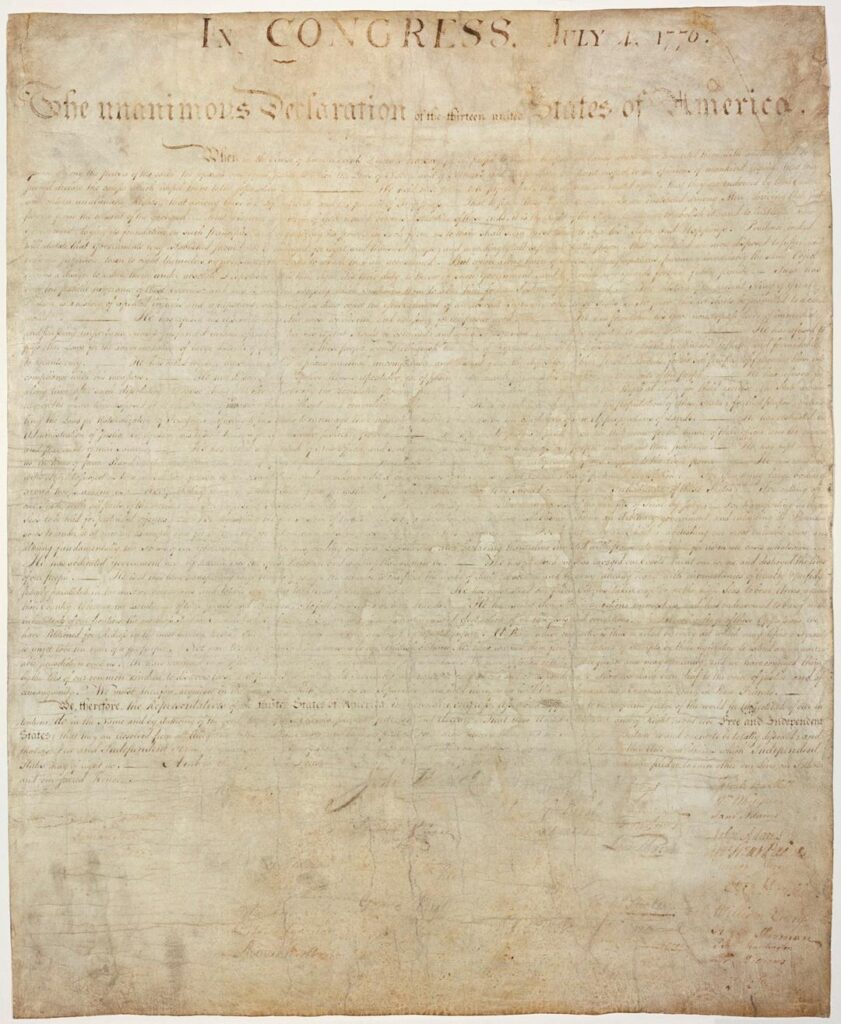
https://www.archives.gov/founding-docs/downloads. Transcript available here: https://www.archives.gov/founding-docs/declaration-transcript
The concept of sovereignty may be understood as the right to govern without the permission of anyone else. This idea was first announced and explained by Jean Bodin in 1576 in his work Six Books of the Republic. The idea of sovereignty tracks closely with the rise and development of that modern form of government called the state.[iv] The concept of sovereignty as it first appeared was held to be a property of government in each state, for example, England, Germany, and Italy each have sovereign governments and so the people of each state are properly considered subjects of their government rather than citizens. In British America, the idea developed that sovereignty is the possession of the people of each colony and later of each independent state. The idea is that the people of a state, like North Carolina, exercise their sovereign authority through their elected legislature, and in turn, it is the duty of the legislature to protect the rights of the citizens of the state. Thus, and this is what Jefferson asserts in paragraph two of the Declaration, whenever a government becomes destructive of the ends for which it is established, protecting the rights of citizens, it is the right of the people. READ MORE…

Need Something? We’ve Made It Easier.
We’ve introduced dedicated email addresses to help connect you with the right member of our team. Whether you’re planning a visit, joining as a member, or supporting our mission, we’re here to help.
Planning a visit?
Hours, accessibility, parking?
Call 910-275-4408 or email
visit@museumofthemarine.org
Tours or Field Trips?
Membership questions?
Join, renew, replace a membership card, or update your information.
membership@museumofthemarine.org
Support the Museum
Donations, sponsorships, naming opportunities, and planned giving.
giving@museumofthemarine.org
Volunteer?
Learn about volunteer opportunities and how to get involved.
volunteer@museumofthemarine.org
Planning an event?
Rent the Great Hall, a classroom or the entire museum for your special event.
RentTheMuseum@museumofthemarine.org
Media and Marketing
Interviews, press, photography, or promotional requests.
media@museumofthemarine.org
General Questions
We’re happy to help.
info@museumofthemarine.org
Copyright, July 2026. Carolina Museum of the Marine
2025-2026 Board of Directors
Executive Committee
LtGen Mark Faulkner, USMC (Ret) – Chair
CAPT Pat Alford, USN (Retired) – Vice Chair
Mr. Mark Cramer, Esq – Secretary
Vacant – Treasurer
Col Joe Atkins, USAF (Retired)
LtGen Robert “Fuzzy” Hedelund, USMC (Ret)
MajGen Jim Kessler, USMC (Ret)
Col Bob Love, USMC (Ret)
The Honorable Robert Sander, Former General Counsel of the Navy
MajGen Joe Shrader, USMC (Ret), President and CEO, Ex Officio Board Member
In Memoriam: General Al Gray, USMC (Ret)
Members
Mr. Mike Bogdahn, US Marine Corps Veteran
MGySgt Osceola “Oats” Elliss, USMC (Ret)
Col Bruce Gombar, USMC (Ret)
LtCol Lynn “Kim” Kimball, USMC (Ret)
Richard McIntosh, USMC (Ret)
LtGen Gary S. McKissock, USMC (Ret)
Ms. Sandra Perez
Mr. Phil Randall, US Marine Corps Veteran
Mr. Billy Sewell
Col John B. Sollis, USMC (Ret)
Col Grant Sparks, USMC (Ret)