While I Breathe, I Hope
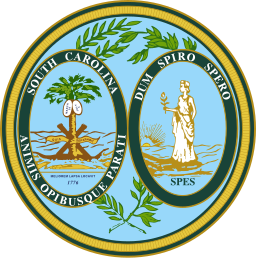
Last month, we discussed the state motto of North Carolina and its implications for individuals and for society more broadly. This month, we follow the same process in examining the state motto of South Carolina. South Carolina actually has two mottos. The first is Animis Opibusque Parati, meaning “prepared in mind and resources.” The second motto is Dum Spiro Spero, meaning “while I breathe, I hope.”
Both mottos are on the state seal, with the first one, “prepared in mind and resources,” bearing an image of a palmetto tree that recalls the victory in a battle against the British during our war for independence at what today is Fort Moultrie (mool-tree) on Sullivan’s Island that protected Charleston.
In defense of Sullivan’s Island, defenders constructed a fort made of palmetto logs, referred to as the Palmetto Log Fort, that was able to withstand bombardment from British warships because the logs are relatively soft and spongy, and so they could absorb the force of cannonballs without shattering, giving to the South Carolinians the advantage of being able to return fire while under bombardment.
In this way, the British attack was repelled and Sullivan’s Island, and thus the city of Charleston, were saved. This explains the motto “prepared in mind and resources.”

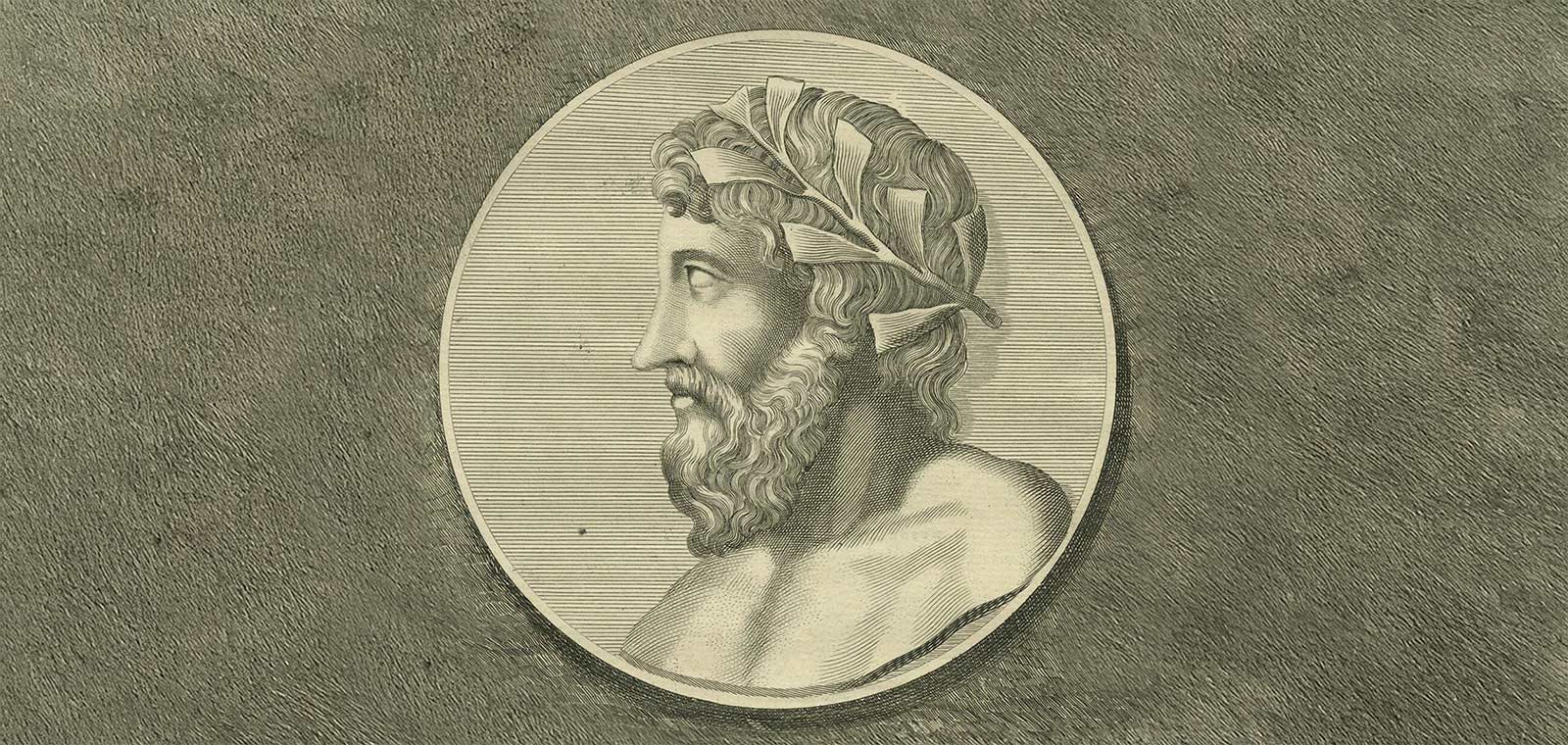
The motto Dum Spiro Spero, while I breathe, I hope, is a phrase of undetermined origin the earliest form of which, scholars believe, is found in the writings of the Greek poet Theocritus, who lived in the third century B.C.
The phrase as it is found in Theocritus is worded this way: “While there is life, there is hope, and only the dead have none.”
In a similar way, the Roman philosopher and statesman Marcus Tullius Cicero wrote to his friend, known generally as Atticus, saying in part: “As in the case of a sick man says, ‘While there is life there is hope,…”
The implication, of course, is that the kind of hope we experience in this life ceases when this life ceases, but conversely, while we live, there is hope for this life.
There is here an interesting parallel in American history that is found in a letter dated 6 September 1789 from Thomas Jefferson to James Madison. The two men had been in conversation concerning what Jefferson called “the elementary principles of society” such as the need for political power to be decentralized in order for people in their communities to govern themselves according to their local cultures and traditions. Yet there is one principle Jefferson thought important, but by that time had not been discussed in any serious way, and that because of Jefferson’s stated concern that the principle was not “very capable of proof.” The principle is presented by Jefferson saying: “I set out on this ground, which I suppose to be self-evident, ‘that the earth belongs in usufruct to the living’: that the dead have neither powers nor rights over it. The portion occupied by any individual ceases to be his when himself ceases to be,…” The concept of “usufruct” is of property which one has the right to use and to take profits from, but which belongs to someone else. In other words, the idea of property rights, Jefferson suggests, is not to insist that some piece of the earth actually belongs to someone in exclusion to all others, and forever, but rather to eliminate, as far as we can, confusion, here and now, concerning who has the right to the use and to the profit of an identifiable piece of land during his lifetime. No one can extend the rights of ownership over a piece of property into his death. Concerning my property and its value to me and to my family, while I breathe, I hope.

This example from Jefferson is used to put “flesh” on the South Carolina motto “While I breathe, I hope,” since it makes clear that the life we now live is the life of our immediate experience, and what we make of it, for good or ill, depends on what we do while we yet breathe. Of course, the making of a good life for a society requires among its various elements that we take heart and courage from those who went before us and who set for us examples of what it means to live with hope both for this life and for the one to come, which for many people, especially in our American tradition, was a source of hope here and now. Those who have gone before and have comported themselves in the finest traditions of their people, stand as emblems of the excellences a people see themselves as existing in history to embody. This is why it is important for a people to remember their history as accurately as they can, for this helps them understand who they are as a people. Importantly, and this is entailed in the motto of South Carolina, what one hopes while he yet breathes includes the effort both to be a person of the sort admired in his cultural tradition and to pass it on the to the next generation. And of course, we work to establish ourselves in life both for ourselves and also for our descendants who will be the hope of our people after we “cease to be.”

It is clear both from the state seals of North Carolina and South Carolina, but it seems to be especially true of South Carolina, that the seals, and the mottos that dignify them, are intended to capture the characters of the peoples of the Carolinas and their histories. It is an important observation for people in general, and certainly for the Marine Corps, that at all times, and especially in times when challenges appear to the valued ways of life of a people, that they find strength and encouragement in their history. This is why it is important that people preserve and remember their history as accurately as they can. We learn from our past, and from the past we may discover how to improve in the present. We return to this theme often because of its relevance to the mission of Carolina Museum of the Marine, and this is the wisdom contained in the first principle of Marine Corps leadership: “Know yourself, and seek self-improvement.” To know oneself, one must understand himself and his personal history accurately, and it is from this understanding that one may seek his own improvement. This is true of individuals, and it is true of peoples. To learn and to grow are vital elements in developing as a person and in living a satisfying and happy life, and it is vital also to the growth and development of a society. Here again we may invoke a truth we have returned to often from Albert Jay Nock: if we wish to contribute to the improvement of our society, the best thing we can do is to “present it with one improved unit,” which is, of course, ourselves. This we do for self and country, understanding the challenges involved, and this embraces the wisdom in the motto of South Carolina: “While I breathe, I hope.”