Honor
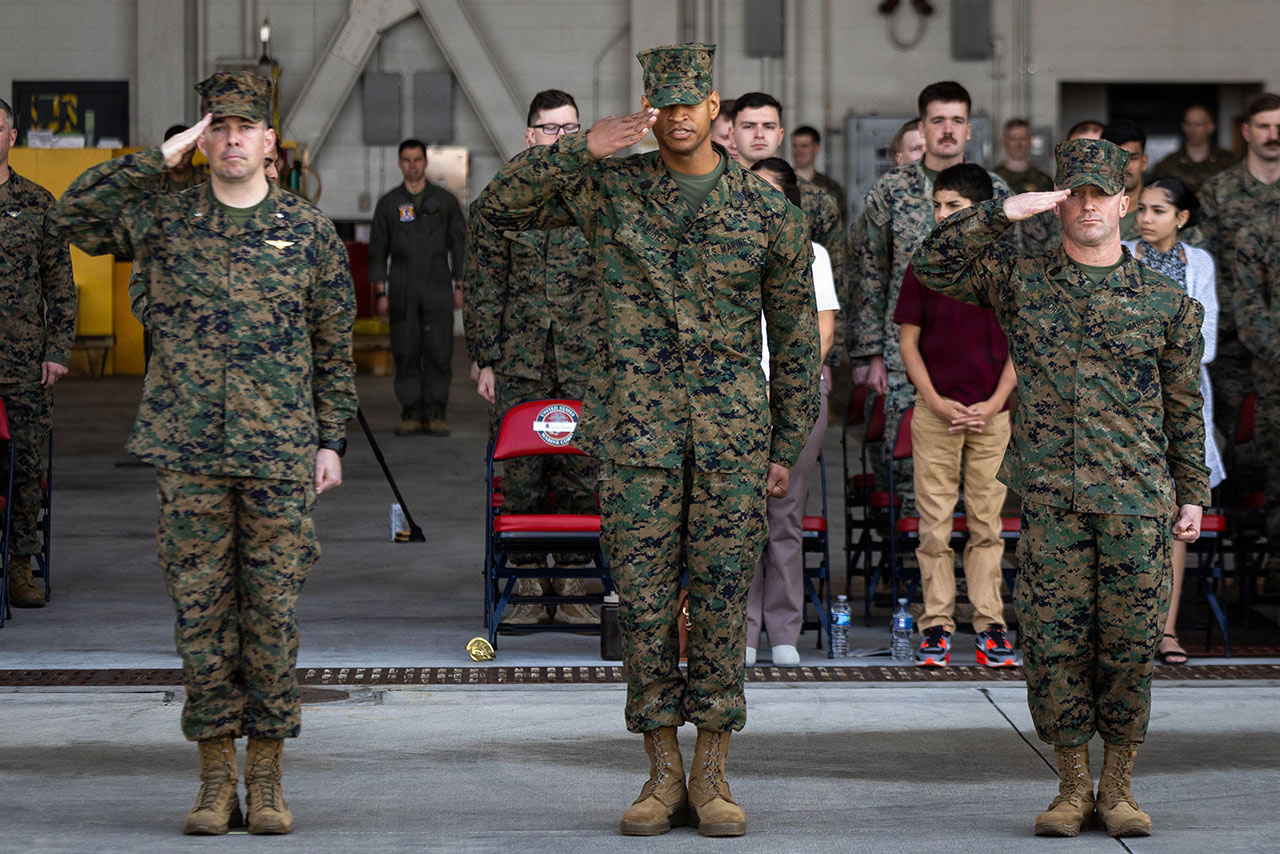
With the April issue of “Front and Center,” we have three issues remaining as Carolina Museum of the Marine opens to the public on 8 June. Each of these issues will feature an essay on one of the core values of the United States Marine Corps: Honor in April, Courage in May, and Commitment in June, as we open.
At the website “Marines.com,” we find the following definition of honor. “Honor guides Marines to exemplify the ultimate in ethical and moral behavior. Never lie, never cheat or steal; abide by an uncompromising code of integrity; respect human dignity and respect others. Honor compels Marines to act responsibly, to fulfill our obligations and to hold ourselves and others accountable for every action.”[i]
At the start of this definition, we find an apparent distinction between ethical behavior and moral behavior. One might reasonably assume that the words “ethical” and “moral” are used interchangeably, but there is a long and interesting history of discussion about the differences, if any, between the meanings and the uses of these words. For example, the Encyclopedia of Philosophy, in its entry on the history of ethics, says in part: “The term ‘ethics’ is used in three different but related ways, signifying (1) a general pattern or ‘way of life,’ (2) a set of rules of conduct or ‘moral code,’ and (3) inquiry about ways of life and rules of conduct.”[ii] So we may think of ethics as one’s general way of life, even if the person living this way doesn’t think very much about it. This is reminiscent of the classical Greek understanding of education as training in the habits of goodness so that when a child grows up, he behaves virtuously even if he wouldn’t readily explain why beyond something like: “I was raised this way; this is how we behave here.” Although, if someone who was educated this way should reflect on the reasons why, he would quickly grasp the sound reasons behind it. The word “ethics” may also refer to a moral code or a set of rules by which someone guides his actions. These rules are not “plucked from the air,” but are thought to be products of the general ethos of one’s society. “Ethics” may also be inquiry into the reasons in support of a way of life or of rules of conduct. Ethics in this third sense is what students study in college courses in ethics.
The origin of the word “ethics” is in Greek, while the origin of the word “morals” is in Latin, and in the ancient world the words seem generally to identify the same thing, which is inquiry into the best kinds of life for a human being to live, and the means by which this is done. However, again in the Encyclopedia of Philosophy, we find an entry on religion and morality that begins by discussing these two things, religion and morality, separately. “A morality, or moral system, contains (1) beliefs about the nature of man; (2) beliefs about ideals, about what is good or desirable or worthy of pursuit for its own sake; (3) rules laying down what ought to be done and what ought not to be done; and (4) motives that incline us to choose the right or the wrong course.” The fourth element about motives is both interesting and important, and so a bit later in this entry we find the following: “So far we have considered only the structure of moral systems; we must also consider their content and the motives that lead us to be moral.”[iii] While it is true that discussions of the content and motives of morality differ, often widely, we find nevertheless that in common usage, people generally use the word “ethics” to describe something rather formal or objective, and “morals” as more personal or subjective.
In the definition of honor with which we began, the motive that guides Marines to “exemplify the ultimate in ethical and moral behavior” is honor. Honor may be considered a martial virtue, or a virtue of warriors, but it is a virtue that may be developed by human beings no matter what function in life they occupy, and the examples of it we see in Marines may be used to instruct others in this important virtue. So after the initial description of honor, which is a general one, we find specific examples. “Never lie, never cheat or steal; abide by an uncompromising code of integrity; respect human dignity and respect others.” Certainly, there is ample discussion of what it means to lie, and the discussion became heated and unhappily distracted by Immanuel Kant’s argument in the 18th century to the affect, it seemed, that it is always unjust to lie under any circumstances whatever. We’ve talked about this here a number of times, but we may sidestep this often interesting diversion by observing simply that a lie is committed when someone deliberately represents as true what he knows not to be true. What it means to cheat or steal, it seems, is straightforward, but it may be helpful to point out that some activities we undertake, like sporting contests, allow as part of the rules of the game that players may seek to deceive opponents in order to gain advantage, but the rules are understood by all contestants and agreed to, and it is understood that when the game ends the rules of the game no longer apply. War is a similar though different undertaking in which many conventional moral rules are suspended, but this is a matter of longstanding and intense study that one may set aside when seeking a general understanding of honor as a value or a virtue.

Among the examples of honor for Marines is to follow an “uncompromising code of integrity.” At “Front and Center,” we have discussed the nature of a code of integrity in the past, saying: “There are two important elements at work here. First, our English word “integrity” derives from a Latin word that means an unimpaired condition (both inner and outer), soundness, health, uprightness. Integrity is a critical component of a well-developed human being. Second, the Marine is enjoined to follow an uncompromising code. Because we share a common nature, honor, courage, and commitment will be expressed, we may say, as the same song for everyone. However, because we are each individuals with our own personalities, and because codes of integrity are personal things, we will each sing that song in our own key.”[iv]
Honor requires that Marines respect human dignity and respect others. We can see others walking around all over the place, but human dignity is not a quantity we can weigh and measure, so how does one respect it? An old argument about the differences between what the human essence is and those qualities about us like sex and color that are not essential rests on the assertion that the human intellect is able to “perceive” realities that we cannot see physically like justice, the good, the true, and dignity. This power of the human soul to perceive the moral dignity in ourselves and in others demands as a background condition that one has a transcendent worldview. A transcendent worldview understands that the reality we inhabit is more than material, but that there is an important, and we may say a more important, non-physical, spiritual aspect to it. A transcendent worldview by its nature contains within it the understanding that this place where we live is created, and that if this is true, we human beings too are created. And not just created, but created in the image and likeness of the Creator, and it is just here where the moral dignity of each human being is rooted. When this is understood, it becomes clear that the moral dignity of human beings requires of each of us, at the least, that we recognize, and even defend, the lives, liberty, and property of others.
Here is where one will hear the claim that not everyone agrees with this explanation of the nature and locus of human moral dignity, but this is a pointless objection, if it is an objection at all. It is not an argument against water, for example, to say that it is wet, it is simply an observation of the obvious. Equally obvious is the observation that people disagree about many things, and the more important the issues, the sharper the differences can be. But when the Marine Corps includes as part of the definition of honor that we respect human dignity, the Corps is standing firmly within an ancient and honorable moral tradition.
Finally, “[h]onor compels Marines to act responsibly, to fulfill our obligations and to hold ourselves and others accountable for every action.” Every Marine is a human being before a Marine. This priority is both temporal and logical in the sense that we are born well before taking an oath to support and defend the Constitution of the United States, and that after taking the oath, the natural moral obligations that attend our humanity continue to hold. We thus act responsibly in part by fulfilling our obligations not just to country and Corps, but by fulfilling our obligations as sons and daughters, husbands and wives, fathers and mothers, friends and members of communities.
We see, then, in the Marine Corps’ definition of honor a clear and forthright understanding that captures the essence of honor as a virtue grounded in an ancient and venerable tradition that is, and can be for all people, a guide for the development of a full and happy life.
[i] The definitions and discussions of honor, courage, and commitment at “Marines.com” may be found here: https://www.marines.com/life-as-a-marine/standards/values.html
[ii] The Encyclopedia of Philosophy, Paul Edwards, Editor in Chief, Volume Three, Macmillan Publishing Co., and The Free Press, New York, 1967, Pp. 81-82.
[iii] Ibid., Volume Seven, P. 150.
[iv] https://www.museumofthemarine.org/wp-content/uploads/On-Honor-Courage-Commitment-09-23-1.pdf